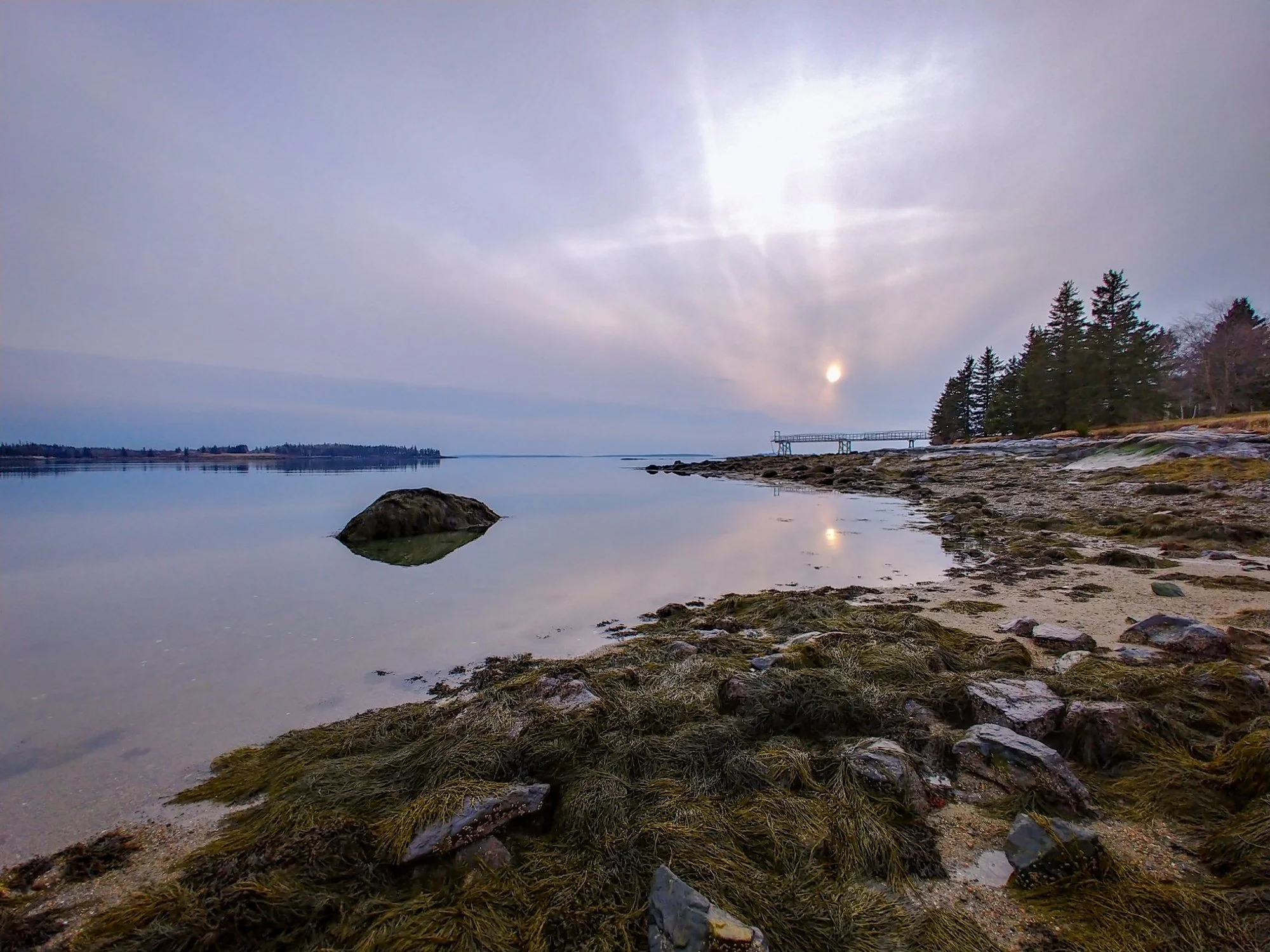
Low Sun at Seal Cove
The map will call this Seal Cove, but to locals it is often known as the Algerine Coast. Like a lot of old Maine place names, the story behind it depends on who is telling it. There are a few explanations floating around, but none I have ever seen nailed down for certain.
That uncertainty is part of the charm. The name feels like something carried by word of mouth — from fishermen, families, neighbors, and people who knew the shore before everything had to be labeled and verified. On this evening, with the low sun hanging over the water and the tide pulled back from the rocks, it felt less like a place on a map and more like one of those old names still doing its quiet work.
Fog Lifting at Manset
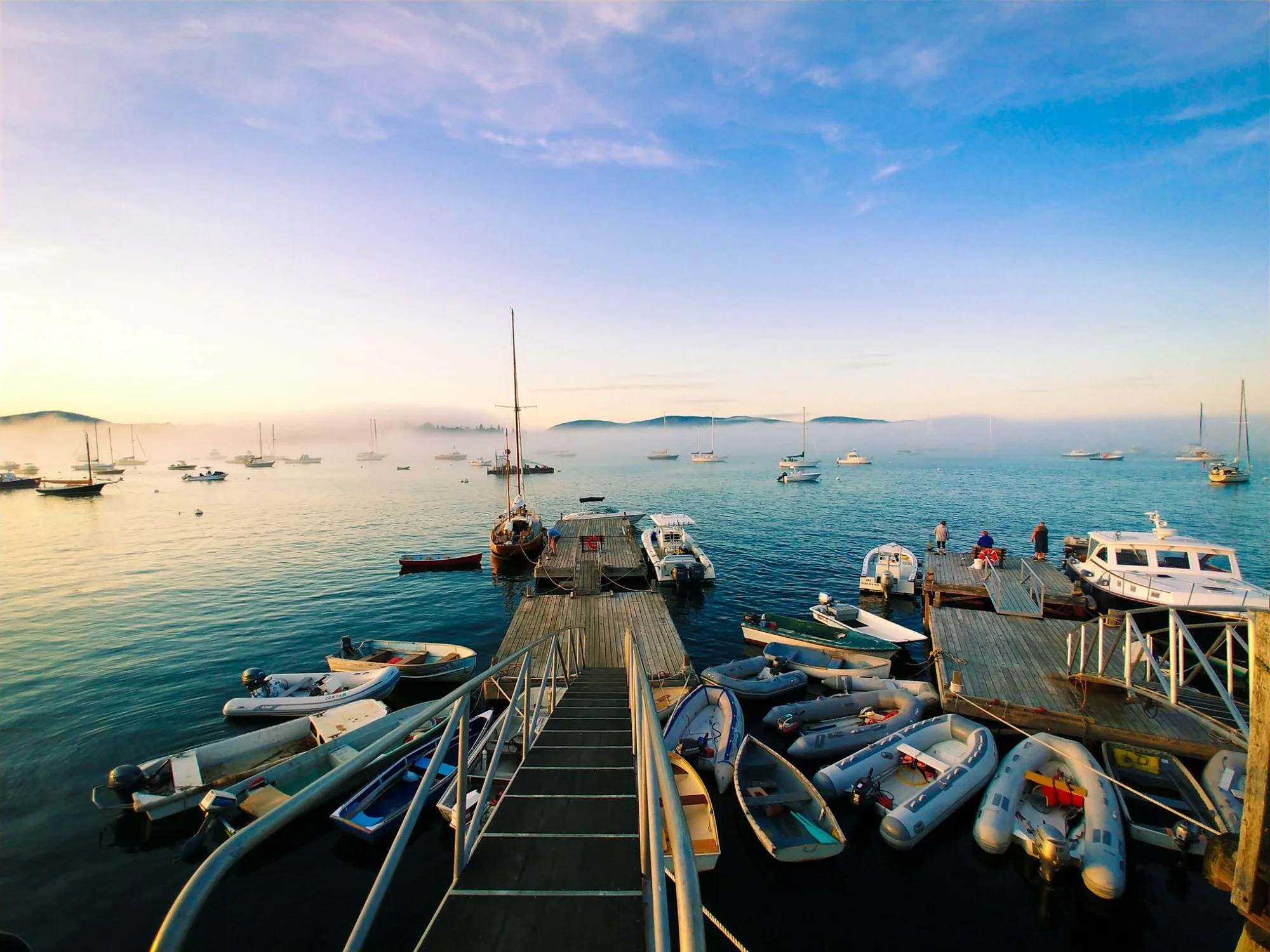
Manset is still a working dock, not just a pretty harbor view. Boats come and go, lobsters are bought and sold, people haul gear, tend moorings, load skiffs, and do the ordinary work that keeps a coastal place alive.
I’m lucky enough to have a mooring here, and I don’t think I have ever felt luckier than the day I got it. It felt like winning the lottery in the strangest, most Maine way possible — a set of GPS coordinates out in the Atlantic that were somehow mine. Not land, not a house, not anything you could hold in your hand. Just a spot on the water, and the feeling that I had been given a small place in the world that mattered.
Chasing Sunset off Islesford (Little Cranberry)
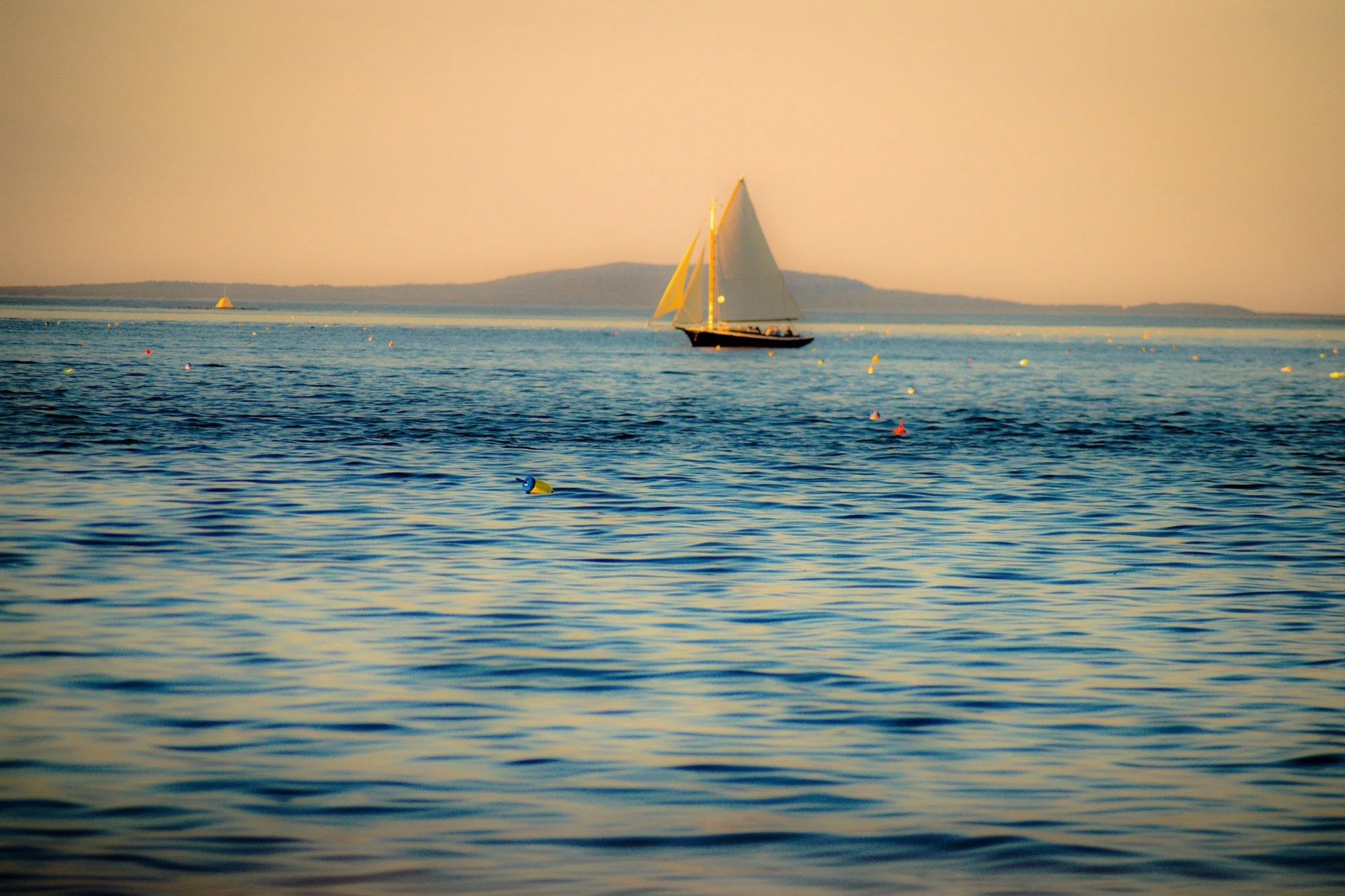
I wrote once that boats chase moments. This is one of the places where that feels true.
After a summer evening at the Islesford Dock Restaurant, with the air still warm and the water gone calm, the ride back toward Manset can feel almost unreal. Mount Desert Island sits ahead in the distance, the sun drops lower, and for a little while the whole bay seems to be holding the light.
Owning a boat rarely makes sense on paper. There is always something to fix, replace, haul, fuel, or worry about. But then there are evenings like this — heading home across the water after dinner, chasing the sunset in front of you — and suddenly all of it feels justified. It becomes one of those moments in time that turns into a memory, and then a memory you spend years trying to catch again.
Fawn Waiting for Mama
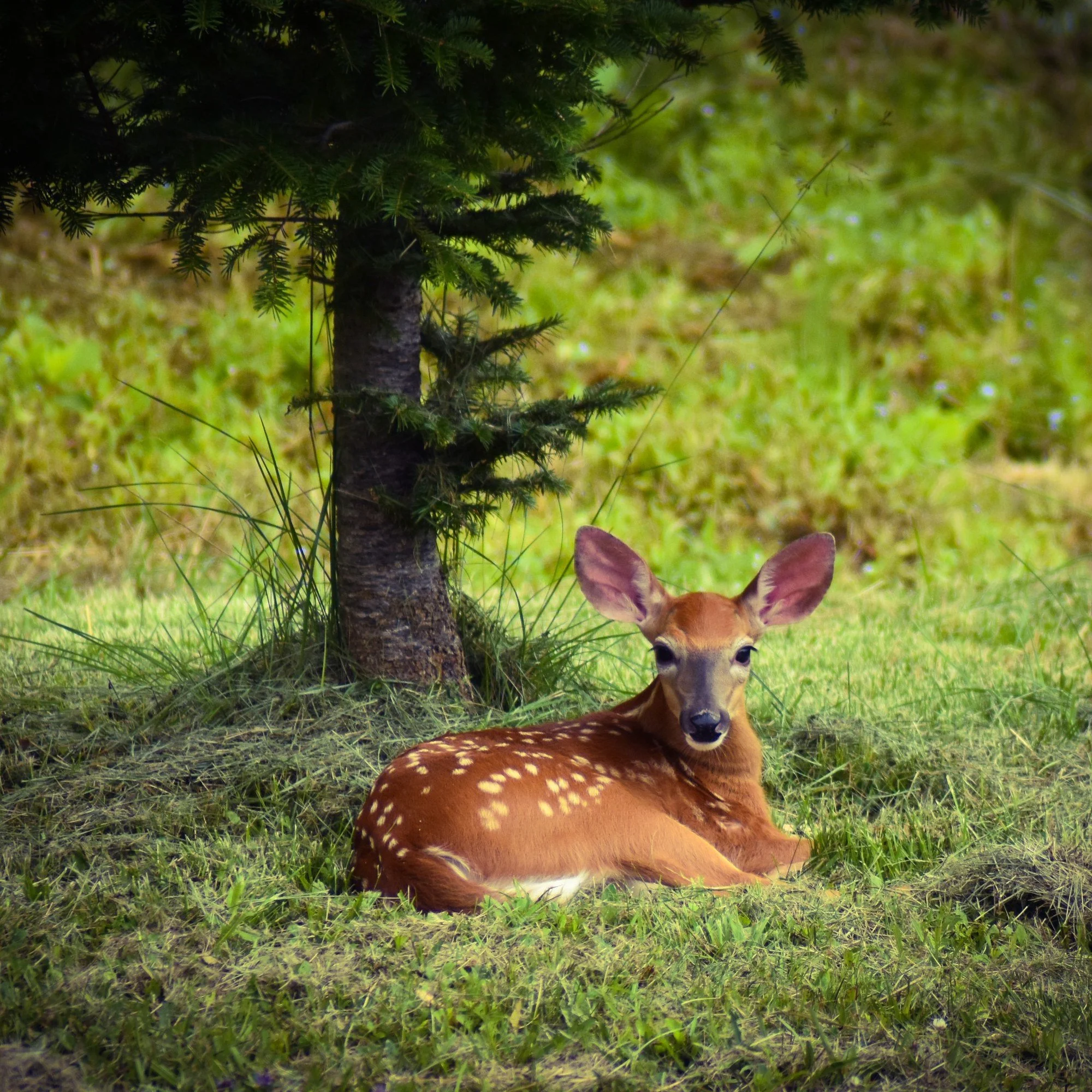
My backyard on Mount Desert Island is a mix of field and edge, the kind of place deer seem to understand better than we do. With no deer hunting on MDI, they are everywhere, and most years there are one or two does that give birth right here around the house.
Over the summer we get to watch the fawns appear, wobble, hide, grow braver, and eventually become part of the daily rhythm of the yard. This spruce has become one of the favored waiting places — the sort of spot where a new mother seems to say, stay here for Mama. And somehow the fawn does, folded into the grass and shadow, trusting the oldest instructions in the world.
Sunbeams on Parkman Mountain
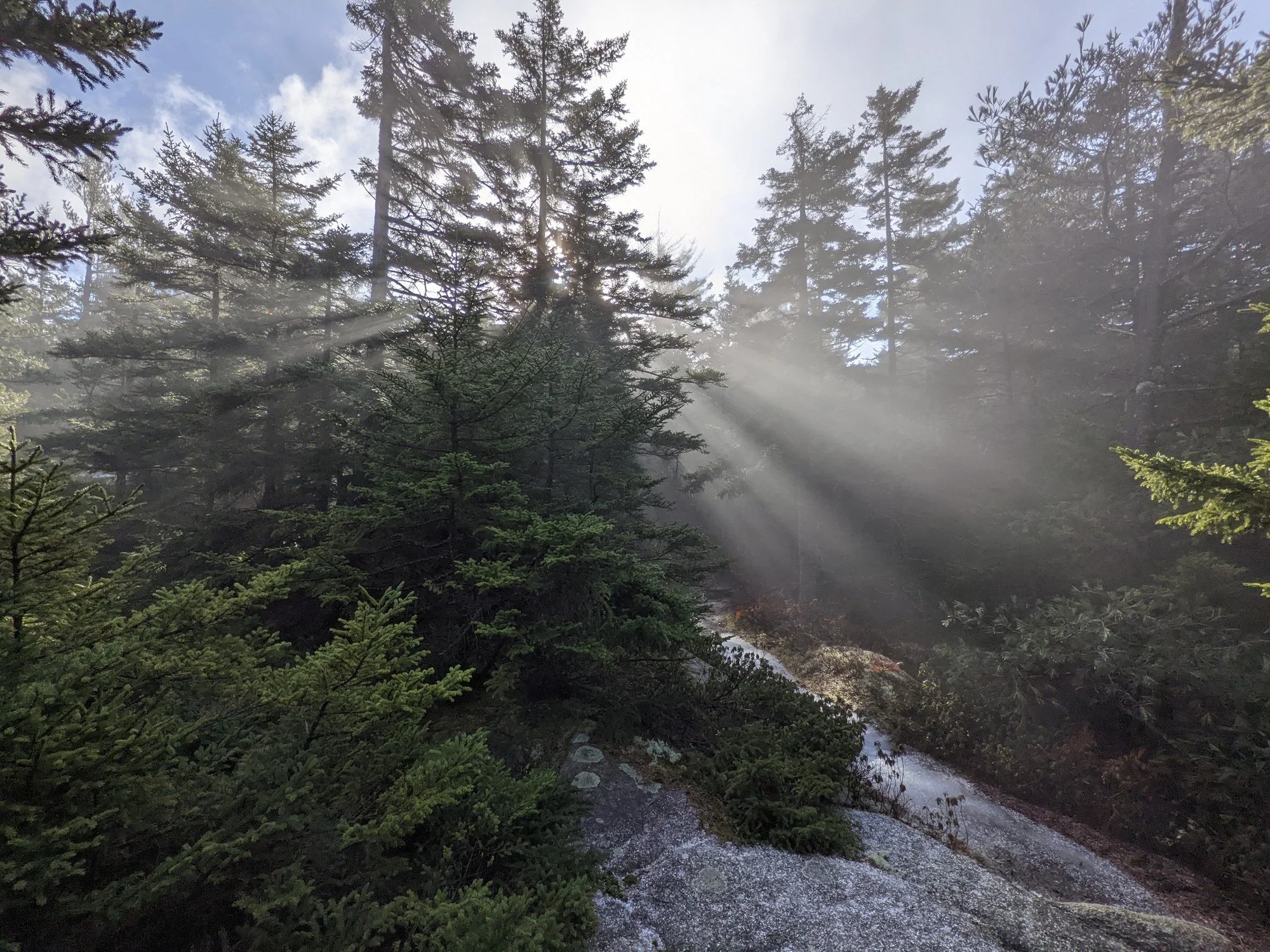
This was taken on an unusually warm New Year’s Eve day on Parkman Mountain, during a time when a lot in my life was changing. The warm air moving over cold ground made the woods breathe with fog, and every break in the trees seemed to turn into a shaft of light.
Some days feel like they are trying to tell you something. I don’t know that they really are, but standing there in the spruce and mist, with sunbeams cutting through the forest, it was hard not to feel like I had walked into one of those rare moments when the outside world briefly matched the inside one — unsettled, beautiful, and full of change.
Sunbeams on Parkman Mountain, Part II
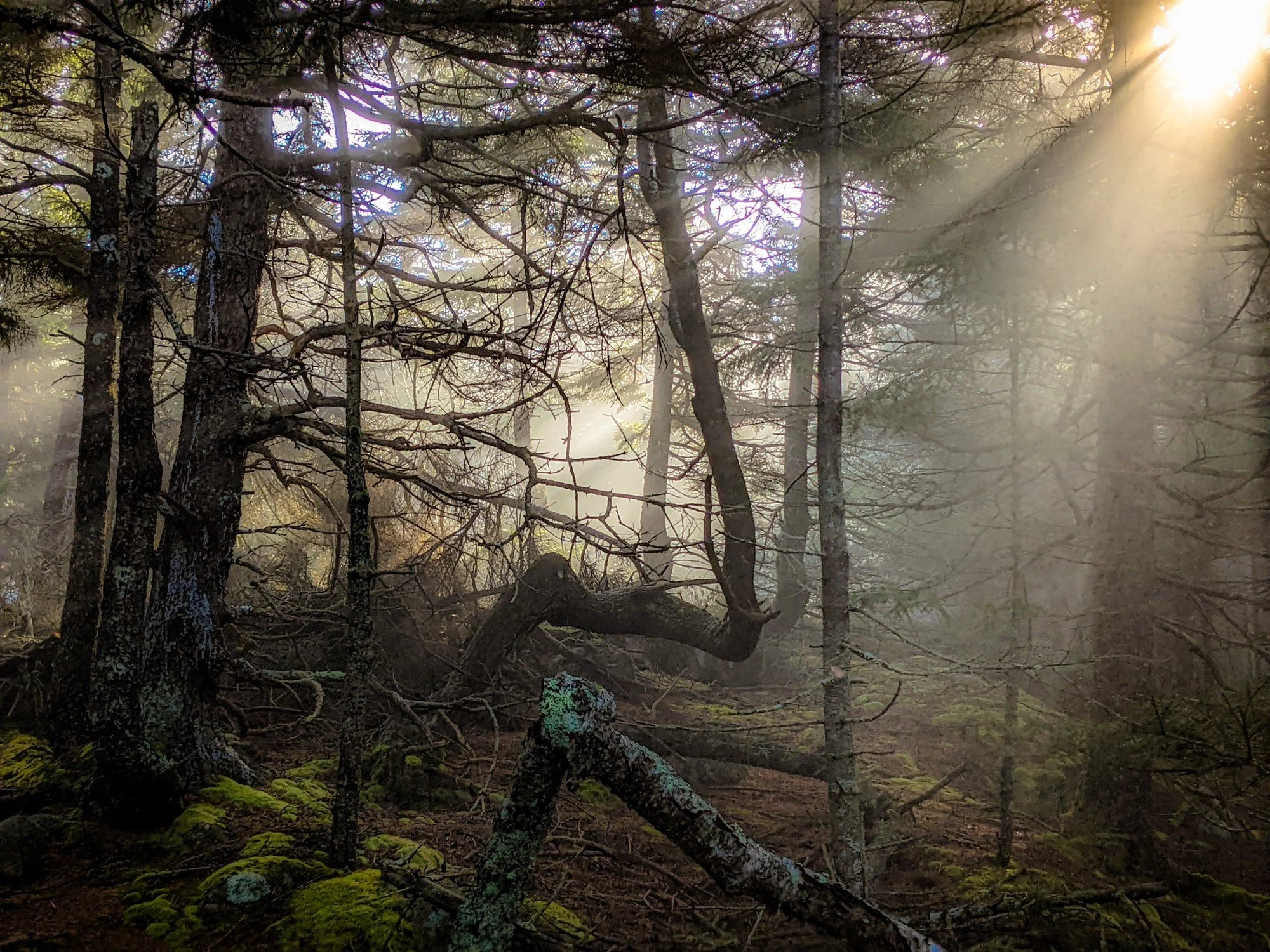
This was taken on the same unusually warm New Year’s Eve day on Parkman Mountain, when the woods seemed to be making their own weather. Warm air moved over cold ground, fog lifted through the spruce, and every opening in the branches caught the light differently.
The first photograph from that day felt wide and open. This one felt deeper in the woods — more tangled, quieter, and a little more mysterious. It was one of those rare days when the mountain did not feel still at all. It felt alive with light, fog, and the sense that something was changing even if you could not quite name what it was.
Above the Fog on Parkman Mountain
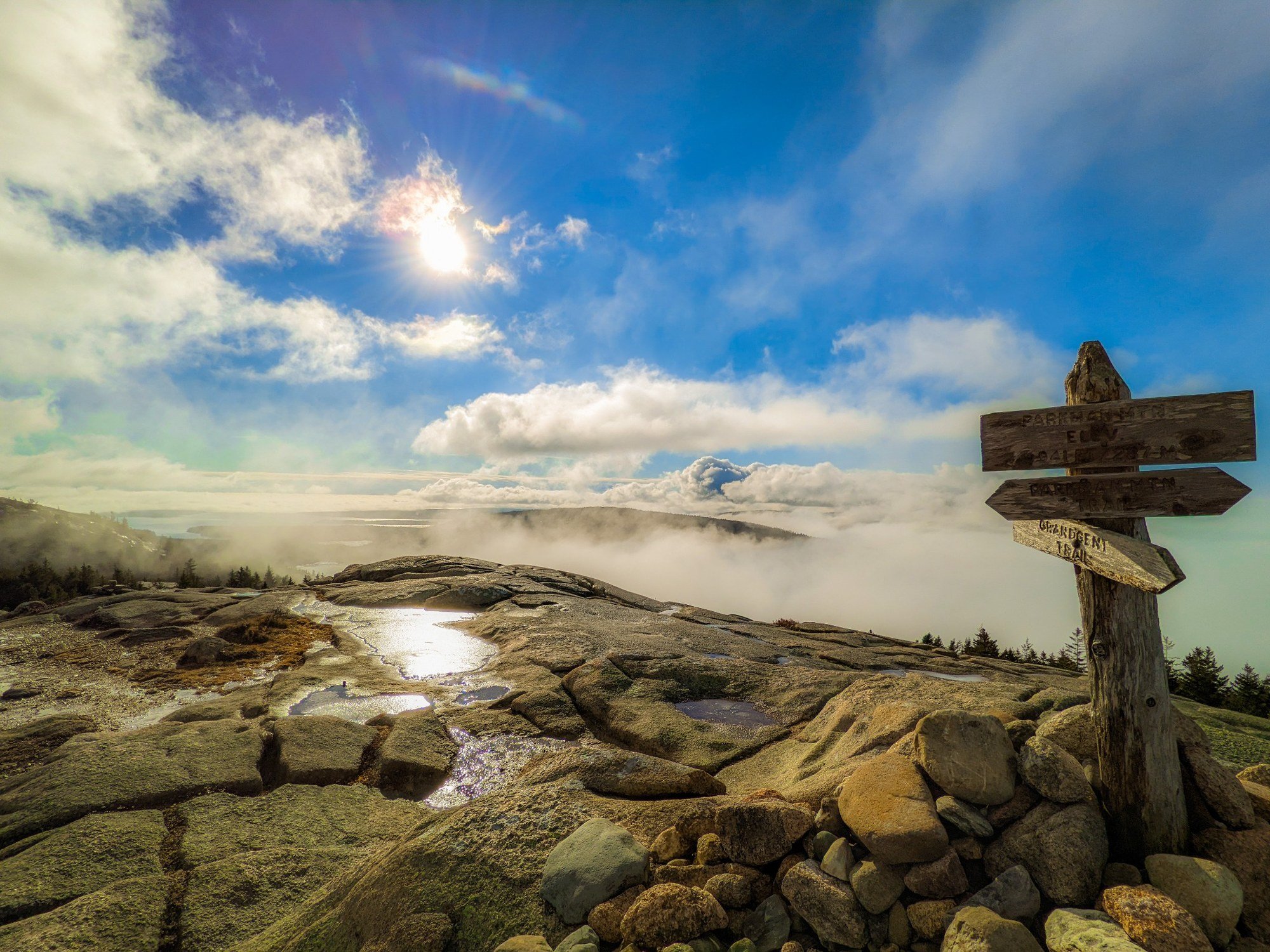
This was the last photograph from that same New Year’s Eve climb on Parkman Mountain. After the sunbeams in the woods, the trail opened onto granite, sky, cloud, and fog rolling below like the mountain had lifted itself above the rest of the day.
When I posted this at the time, people loved it, and I understood why. It had that feeling you hope for when you carry a camera up a trail — the sudden reward, the view that makes the climb worth it, the moment when the weather, light, and place all briefly agree. For me, it also marked the end of that strange, beautiful walk: warm air over cold ground, fog moving through the island, and a year ending in a way I still remember.
Where Wind and Cold Make Art
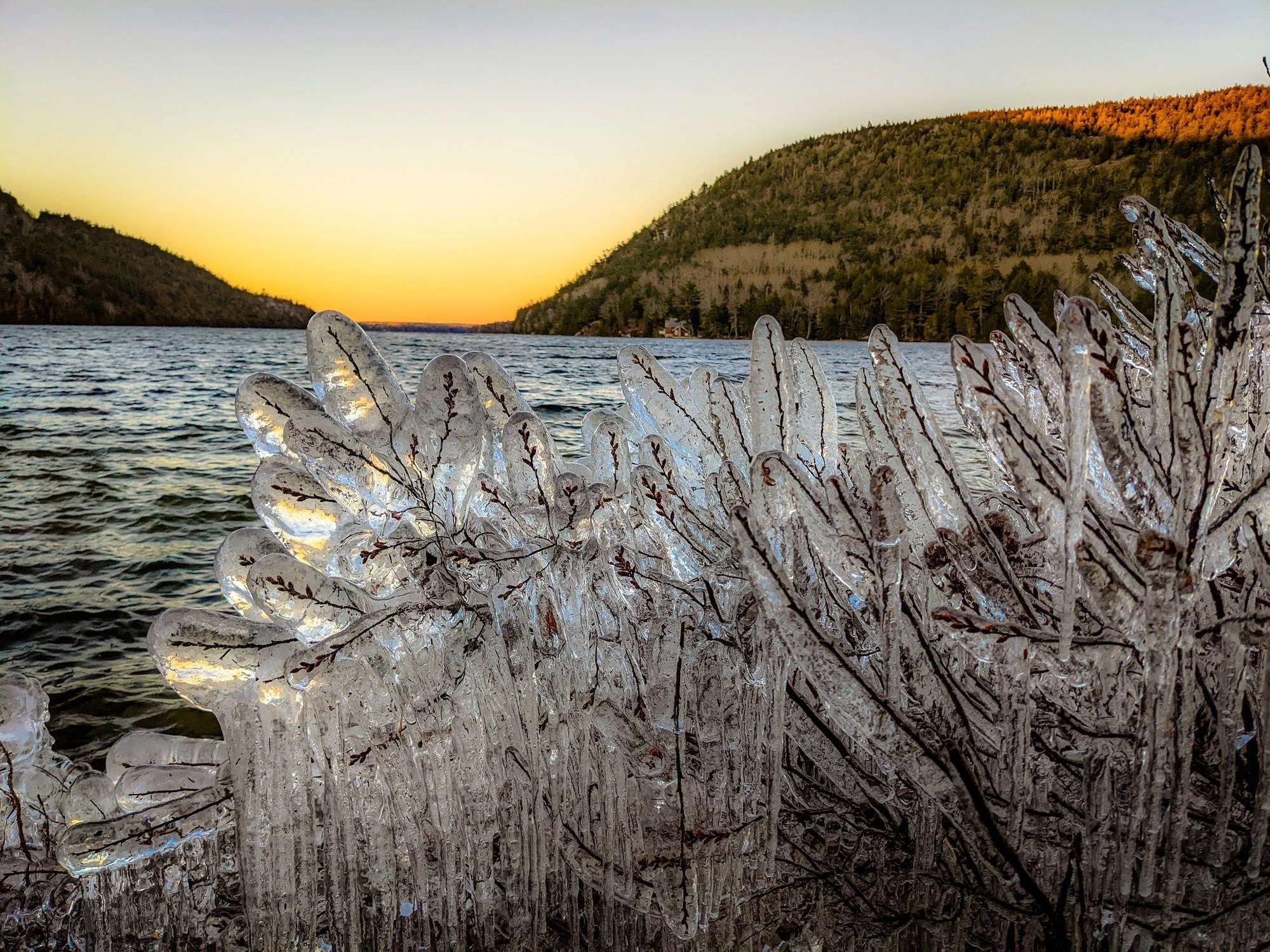
On the Southwest Harbor side of Long Pond — once known as Great Pond — this happens almost every year. Wind, cold, water, and shoreline brush go to work together, and by the time they are done the lake has opened a gallery no one had to build.
I have come back to photograph it year after year, because it is never the same twice. Cold is tenacious, but wind is relentless, and until one finally wins over the other they seem locked in a kind of battle. What they leave behind is nature’s art: clear ice wrapped around twigs and grass, lit by the last color of the day, free to enter and gone as soon as the weather changes.
The Sound of Wind
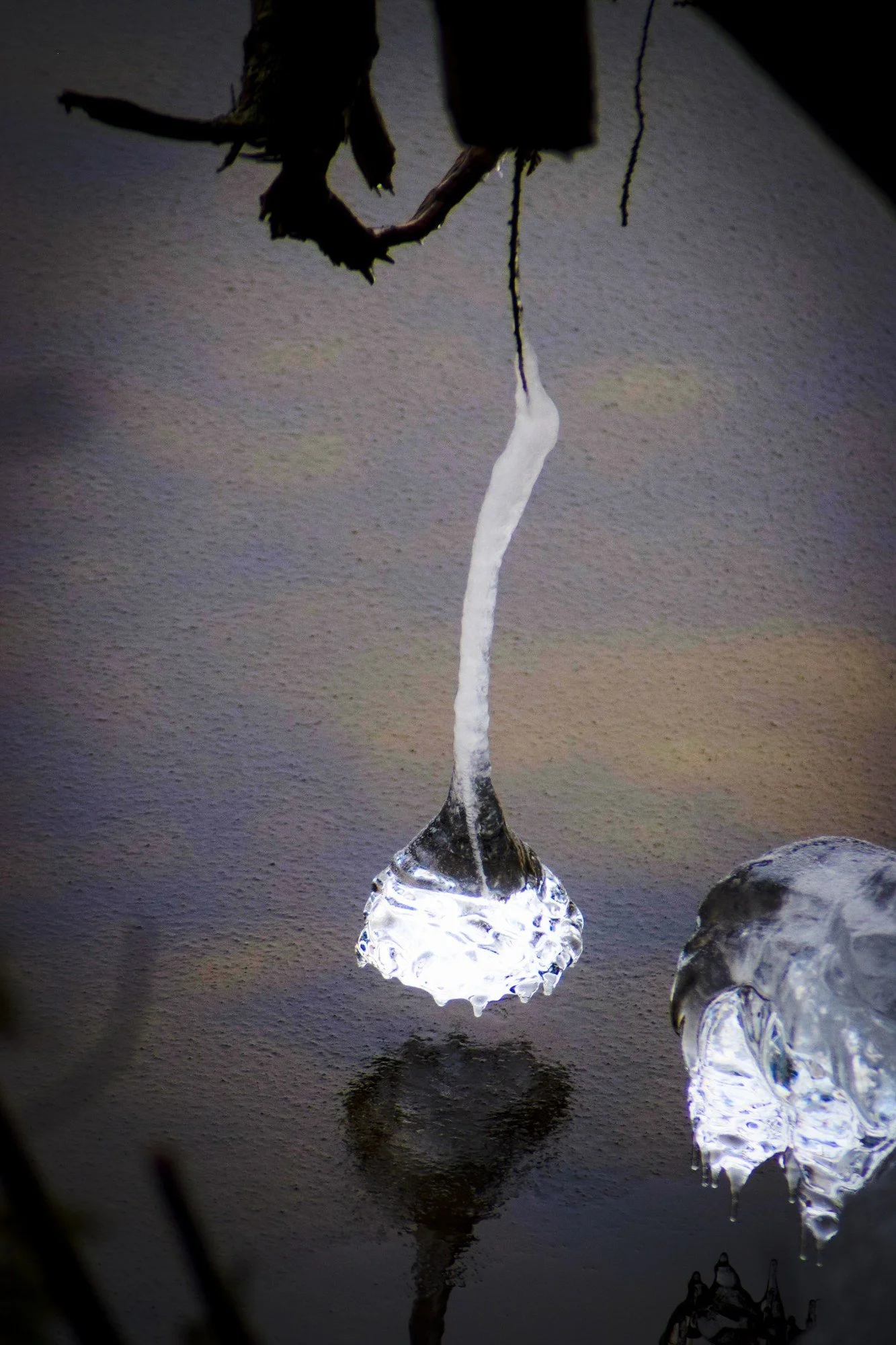
Winter solitude —
in a world of one color,
the sound of wind.
— after Bashō
On the Southwest Harbor side of Long Pond, the cold does not just arrive. It builds things. A branch, a reed, a bit of shoreline brush — anything the wind can reach becomes part of the work.
This piece of ice looked almost deliberate, like something shaped by hand and then left hanging over the water. But it was only weather: cold holding on, wind pushing back, and the lake making one more small sculpture before the next thaw erased it.
A Small Piece of Winter
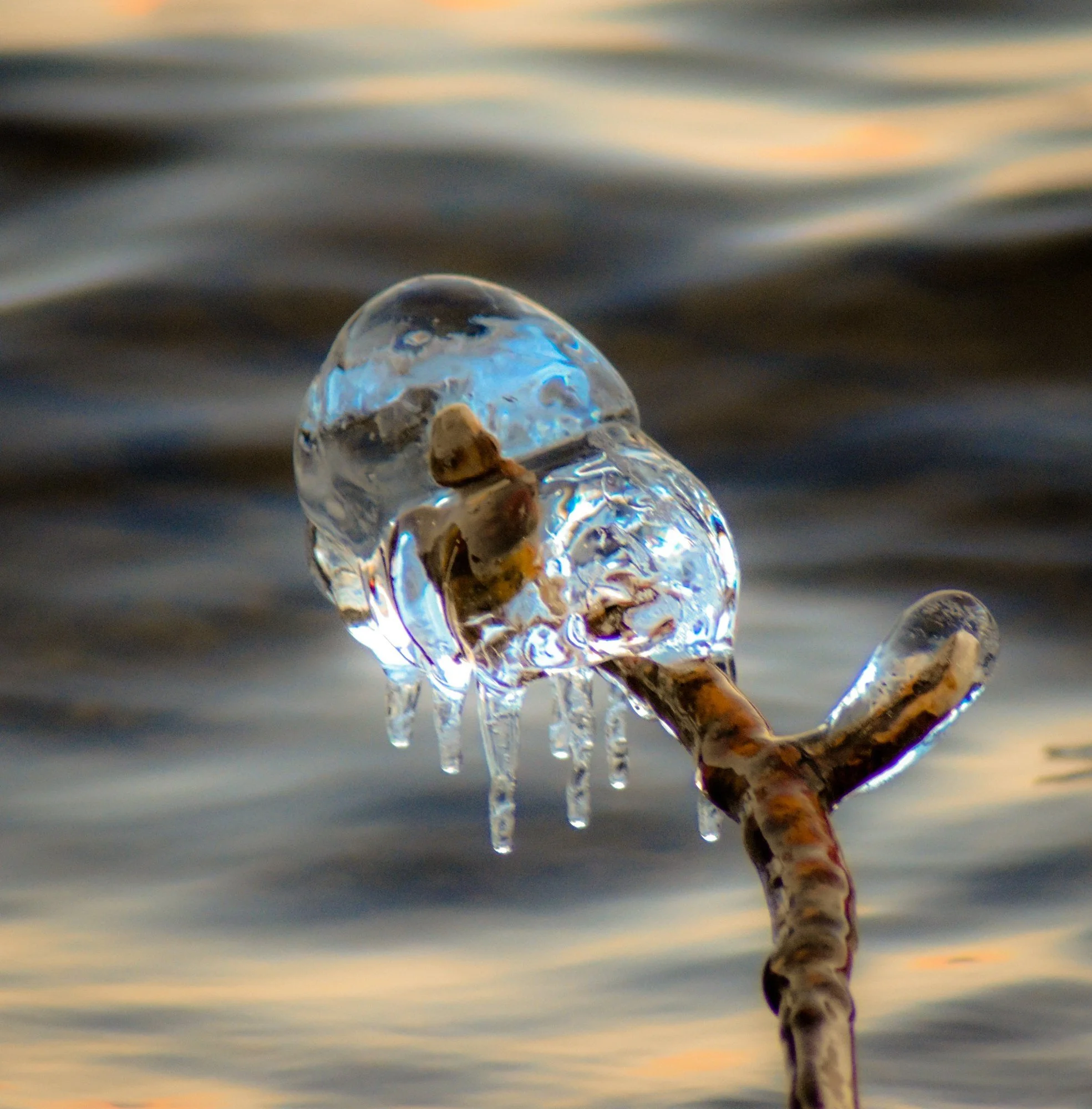
The longer you look along the edge of Long Pond, the more these little things appear. A twig becomes a sculpture. A drop of water becomes glass. The lake, the wind, and the cold keep working in miniature, making small pieces of winter that disappear almost as quickly as they form.
This one felt less like ice and more like a found jewel — clear, fragile, and lit from behind by the last colors moving across the water. It is the kind of thing you could walk past a hundred times if you were in a hurry, which is probably why I keep going back.
:::
A Crown of Ice
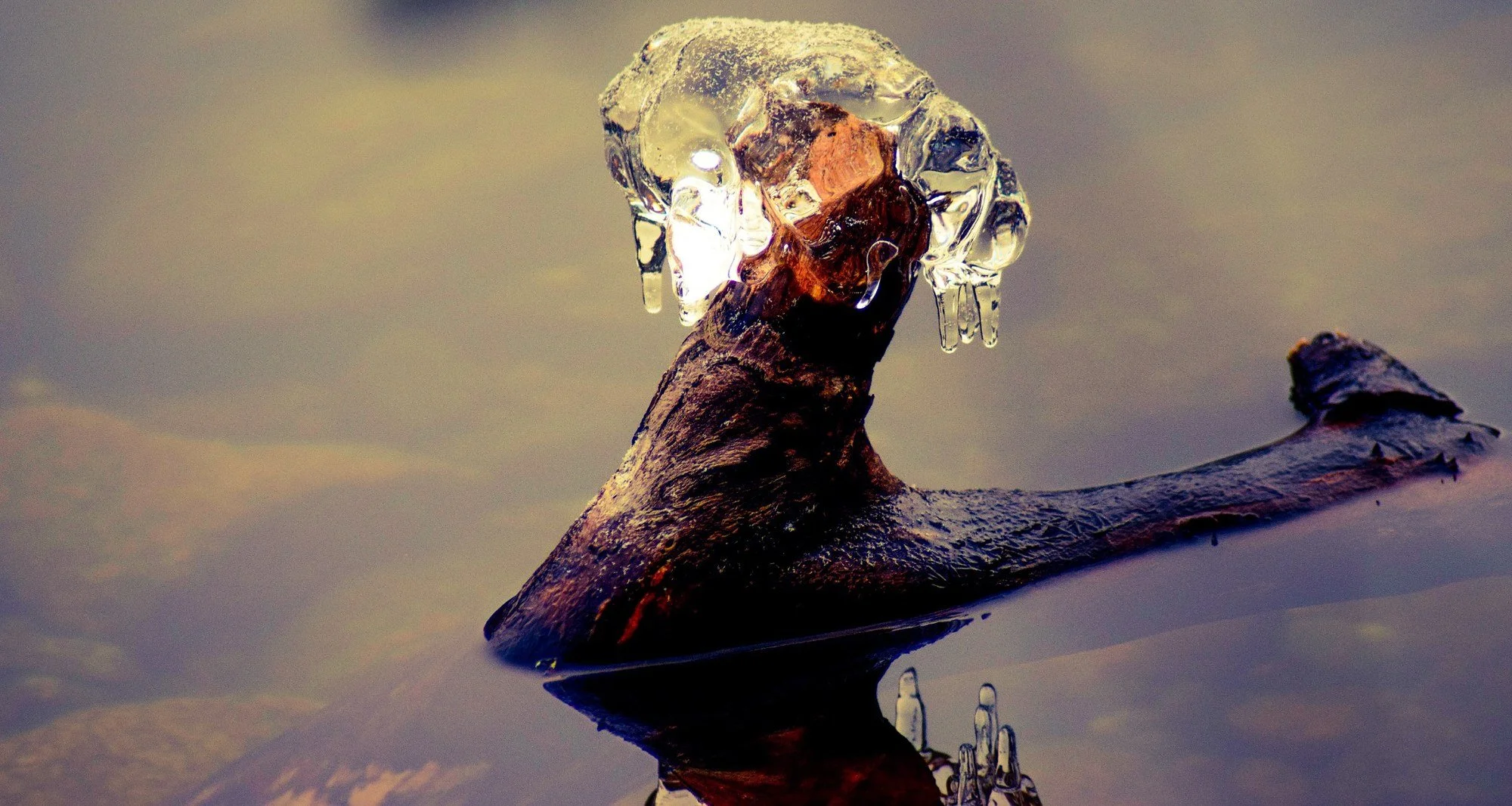
Some pieces of ice look accidental. Others look almost claimed. This one had settled over the end of an old branch like a crown, clear and bright against the dark wood, with its reflection waiting underneath in the winter water.
It was still part of the same Long Pond gallery — wind, cold, and lake water working together without plan or audience. But this one felt different: heavier, stranger, almost ceremonial. A small throne of weather, made for no one, lasting only until the next change in temperature took it back.
The Way Back to Little Long Pond
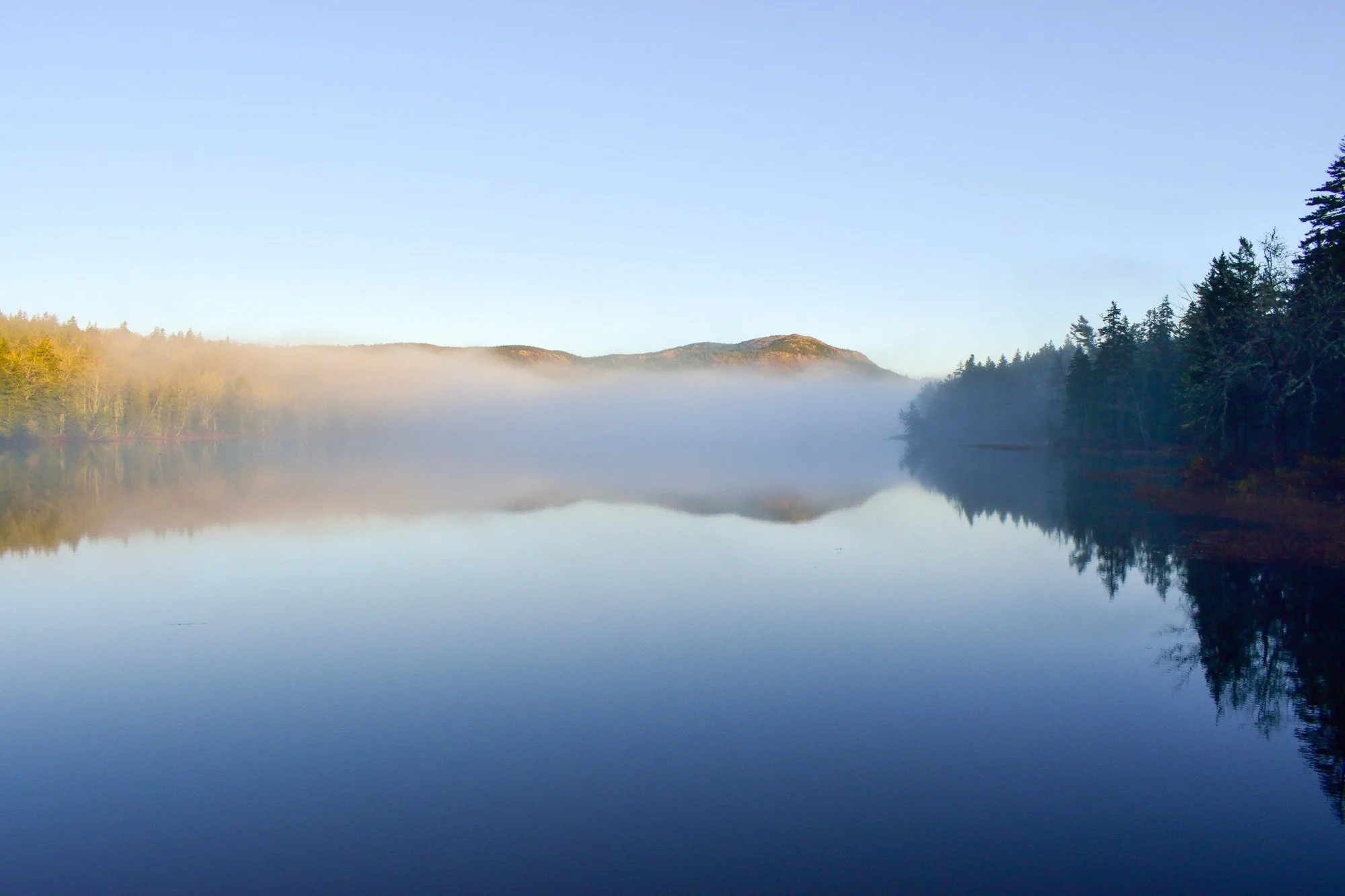
Little Long Pond was not a new place to me. It was one of the old constants — a place from childhood, from fishing trips, bike rides, sledding, swimming, dogs, family, and all the small memories that stay attached to a landscape long after you think you have forgotten them.
When life came apart, I found myself coming back here. I think I was grounding myself without fully knowing it, returning to a place that had known me before everything got complicated. The fog on the water felt right for that season of life: quiet, half-hidden, but still beautiful. It had been too many years, but I could still find the path in the dark.
The Constant
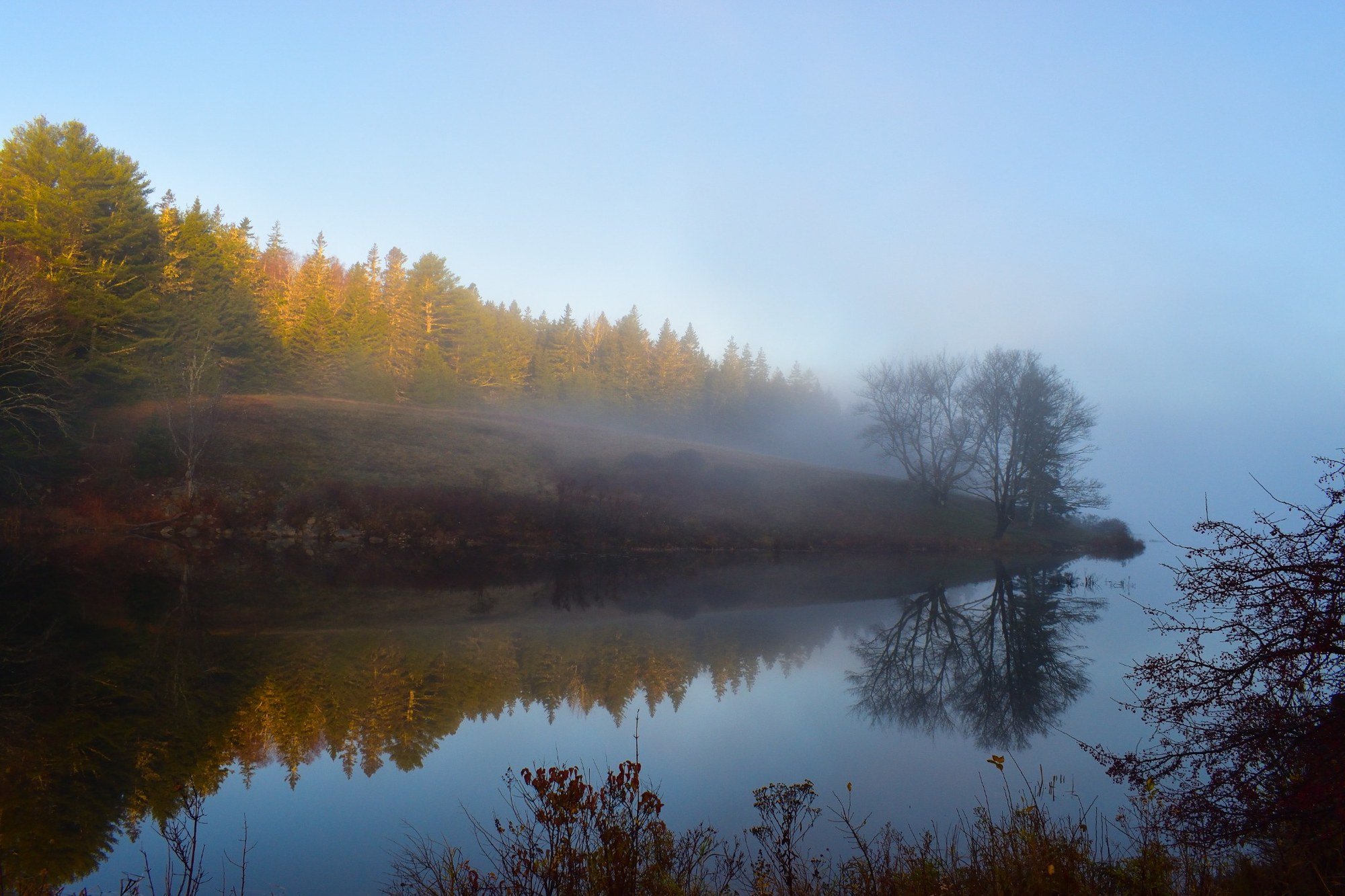
Some places do not ask anything from you. They are simply there, waiting, the same way they have always been. Little Long Pond, in Seal Harbor, has been that kind of place for me.
When I came back to it during that hard season, it felt less like discovering something new and more like remembering how to stand still. The fog moved across the water, the trees caught the first light, and the reflections held everything upside down and whole. In a life that had suddenly become full of variables, this place felt like a constant.
A Constant in the Fog
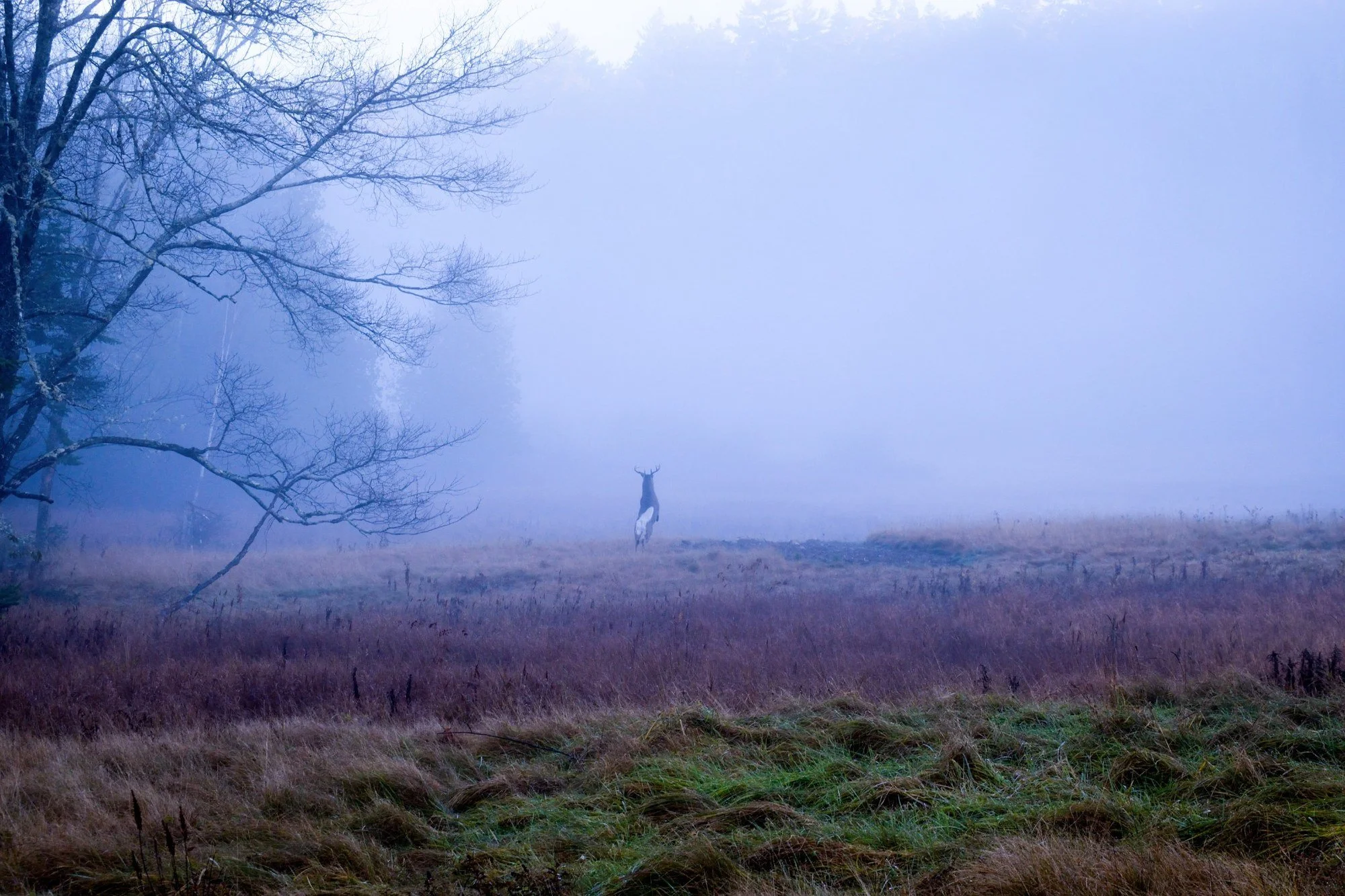
There are moments at Little Long Pond when the place feels almost outside of time. Fog softens the field, the trees disappear by degrees, and then something living breaks through the stillness before you are fully ready for it.
This buck was running away from me, and I caught him in that strange half-second when motion almost looks like a pose — lifted, alert, nearly standing up in the mist. That is part of what I love about the photograph. It was not arranged. It was not waiting for me. It was just the pond giving me one quick glimpse, and me being lucky enough to press the shutter before it was gone.
A Place That Held Still
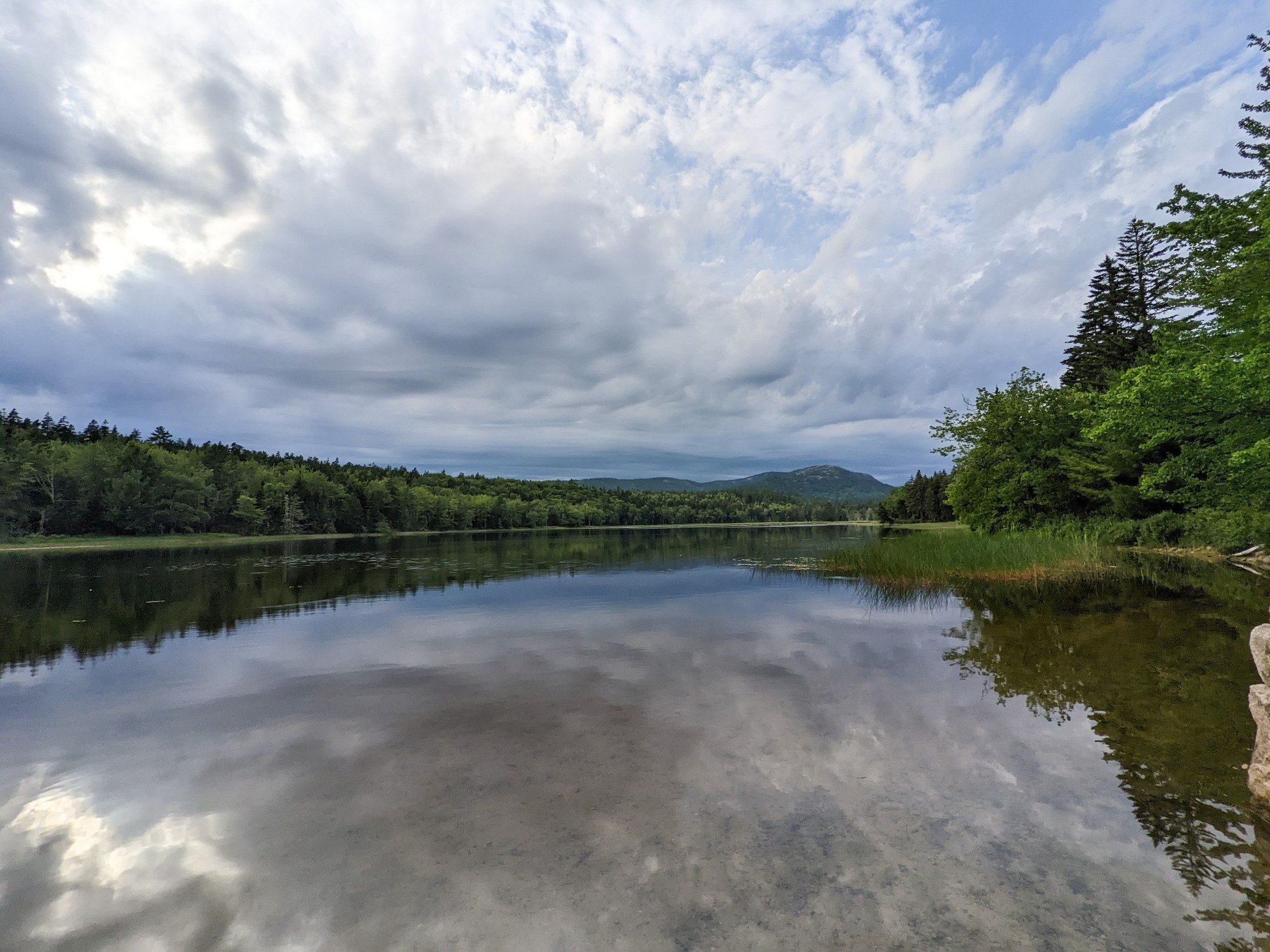
Little Long Pond has a way of making the world slow down. On days like this, when the clouds settle into the water and the hills seem to sit both above and below the surface, it feels less like looking at a view and more like standing inside a pause.
That was part of what I needed when I came back here. Not answers, exactly. Just a place that would hold still long enough for me to catch my breath. The pond, the trees, the old paths, the reflections — all of it had been here before me, and all of it would still be here after. Sometimes that is enough to begin again.
II Can Still Find the Path
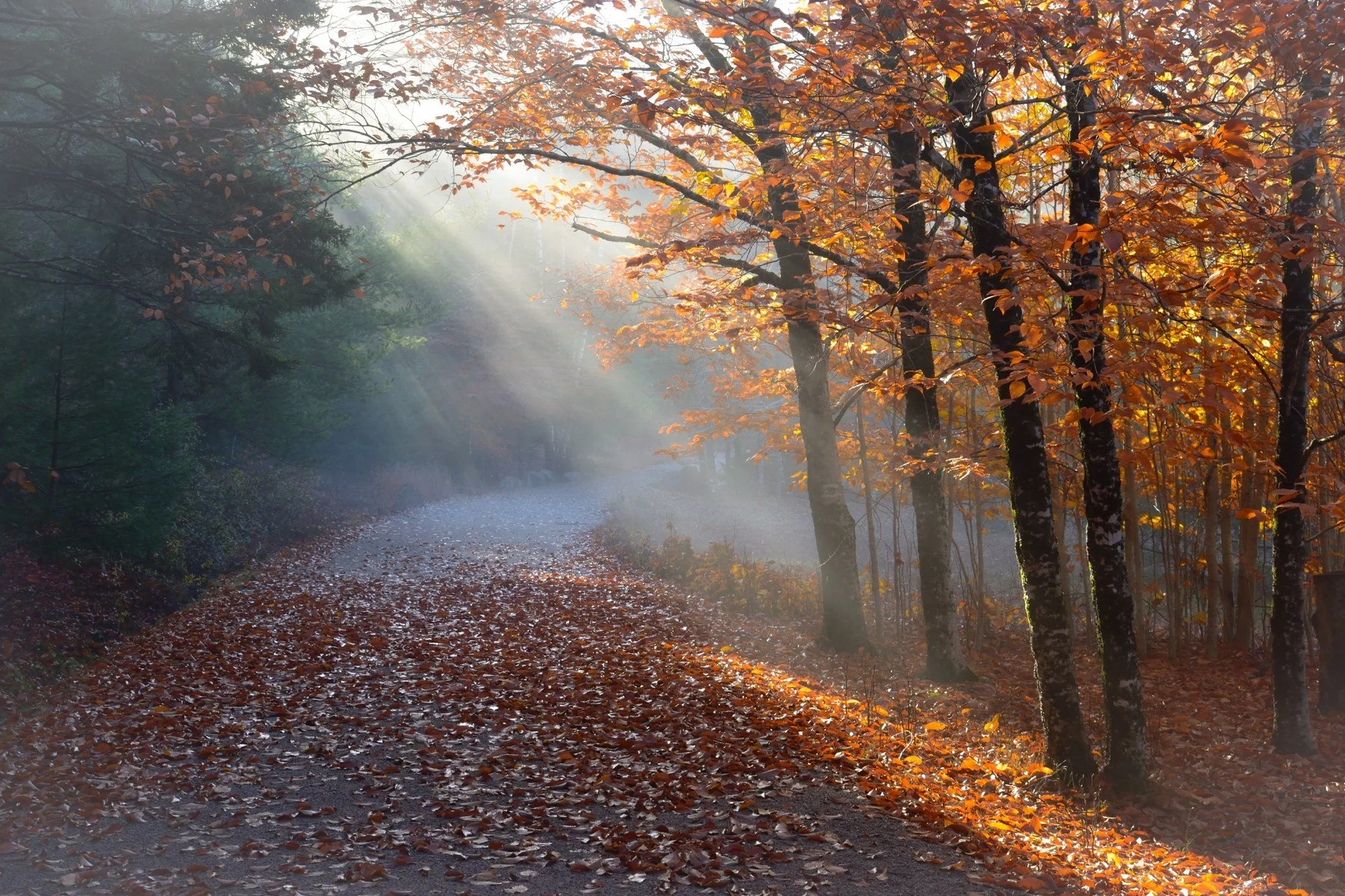
This feels like the right place to end the Little Long Pond series: not on the water, but on the path back through the woods. The road was wet with leaves, the fog was lifting, and the morning light came through the trees like the place was opening itself again.
For a while, Little Long Pond was where I put things I could not carry anymore. It was memory, family, childhood, grief, and restart all tangled together in one familiar landscape. It had been too many years, but I could still find the path in the dark. And eventually, after enough mornings like this, I started finding it in the light too.
The Orchard I Grafted During Covid
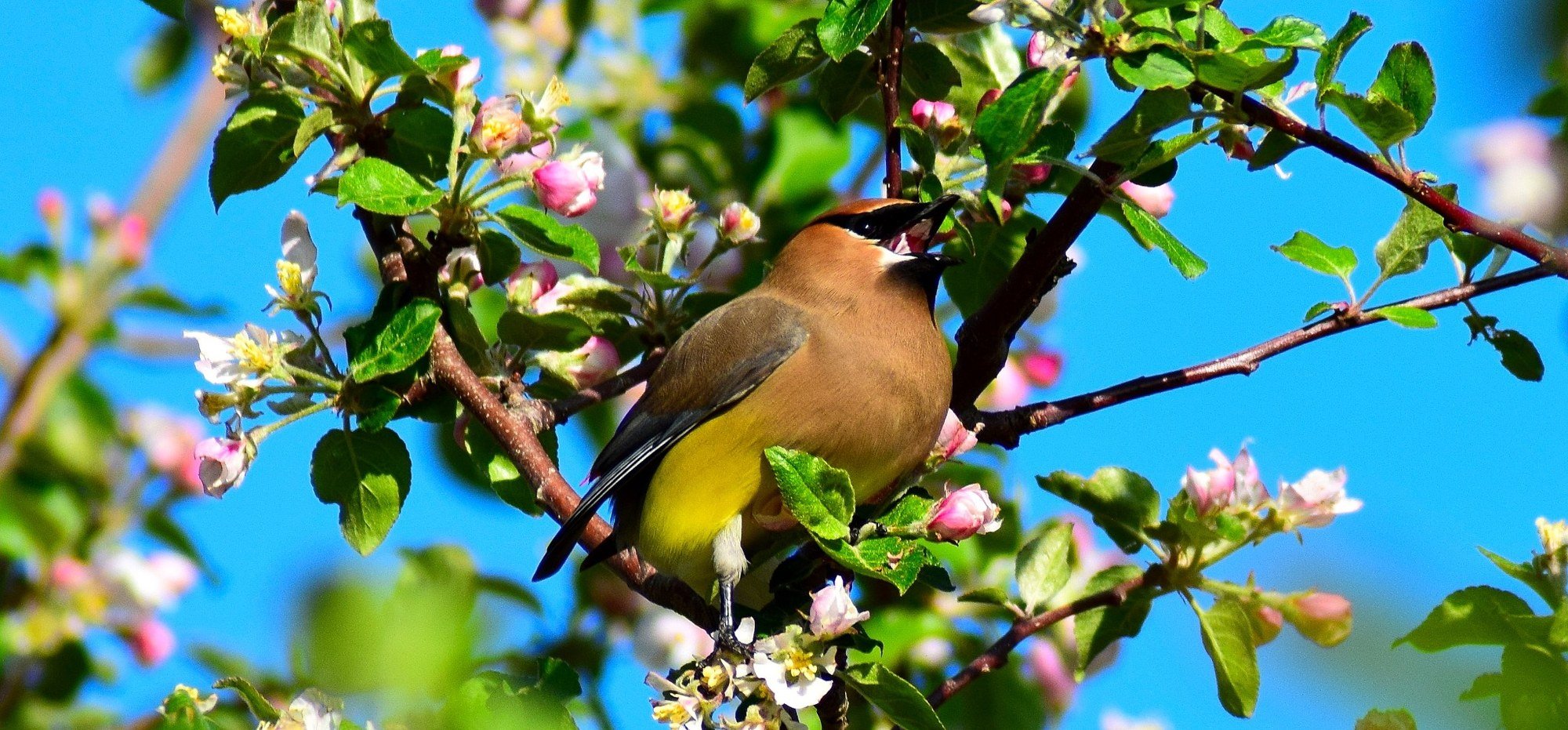
During Covid, I did not just graft a few apple trees. I grafted an orchard — thirty trees, filled with old heirloom cider apples, dessert apples, and strange pre-colonial varieties most people have never heard of. It became one of those projects that was part hobby, part obsession, and part way of building something when the world felt like it had stopped.
I make hard cider, so the orchard has always been more than decoration to me. It is future fruit, future fermenting, future bottles, and future stories. This waxwing was not on one of the grafted trees, but on an old apple already growing on the property, gorging itself on blossoms like it had found the best seat in the house.
Southwest Harbor in Fog
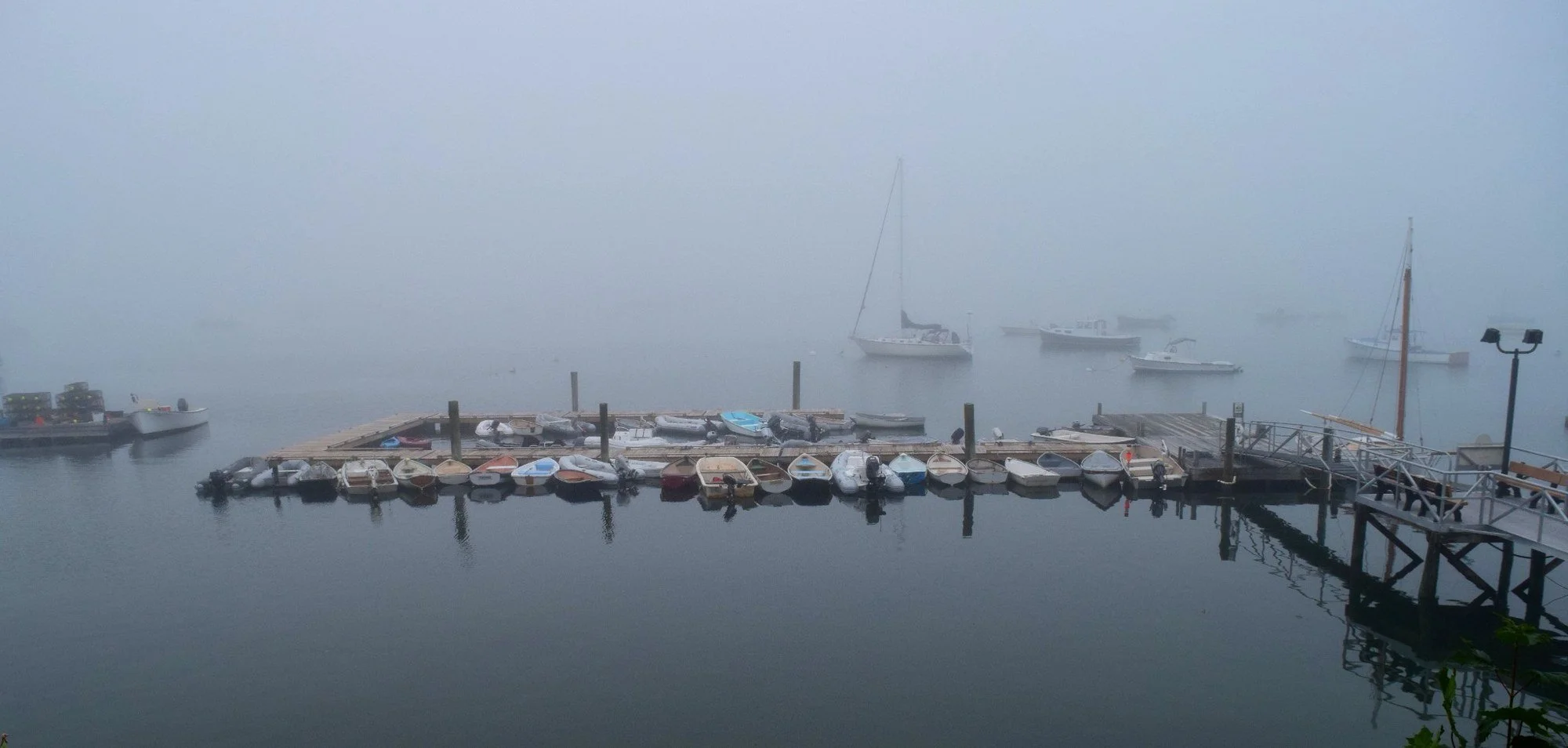
Southwest Harbor can disappear in pieces. First the islands go, then the far boats, then the edges of the harbor itself, until only the nearest docks and skiffs remain. Fog does not erase a place all at once. It takes its time.
That is part of what makes this side of Mount Desert Island feel different to me. It is quieter than the postcard version of Acadia, more working harbor than spectacle. Lobster boats, dinghies, moorings, floats, foghorns, and the slow business of people who live close to the water. On mornings like this, the harbor feels half-hidden, but never lost.
The Sky in Seal Cove Pond
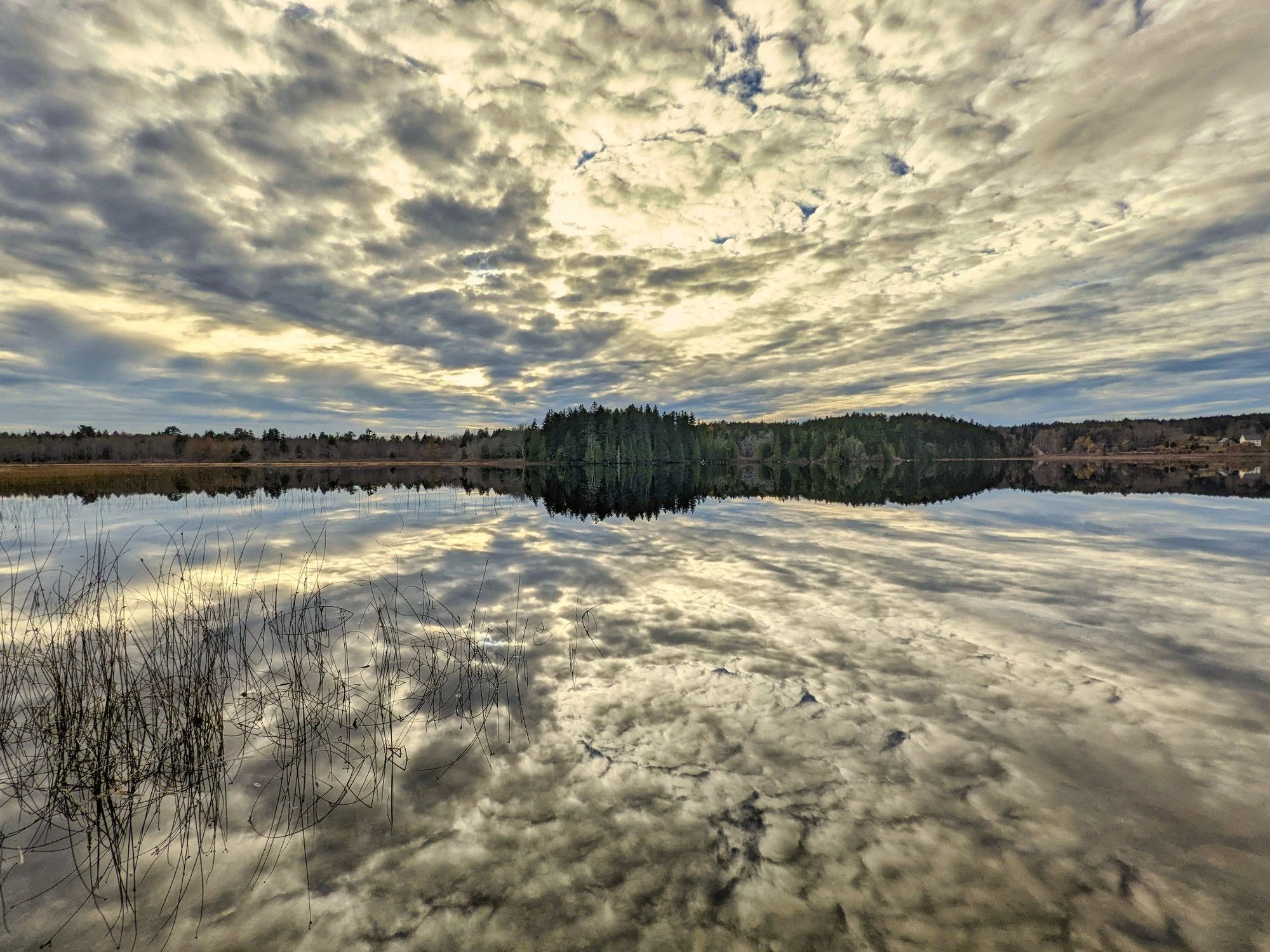
Seal Cove Pond has a way of turning the sky upside down. On a still day, the water becomes less like a pond and more like a second sky, holding every cloud, every break of light, and every dark edge of the shoreline.
This is one of those quiet Mount Desert Island places that does not need much from you. You just have to stop long enough to notice what it is doing. The clouds were dramatic enough above me, but reflected in the pond they became something else entirely — a whole weather system laid out at my feet.
Sunset at the Manset Dock
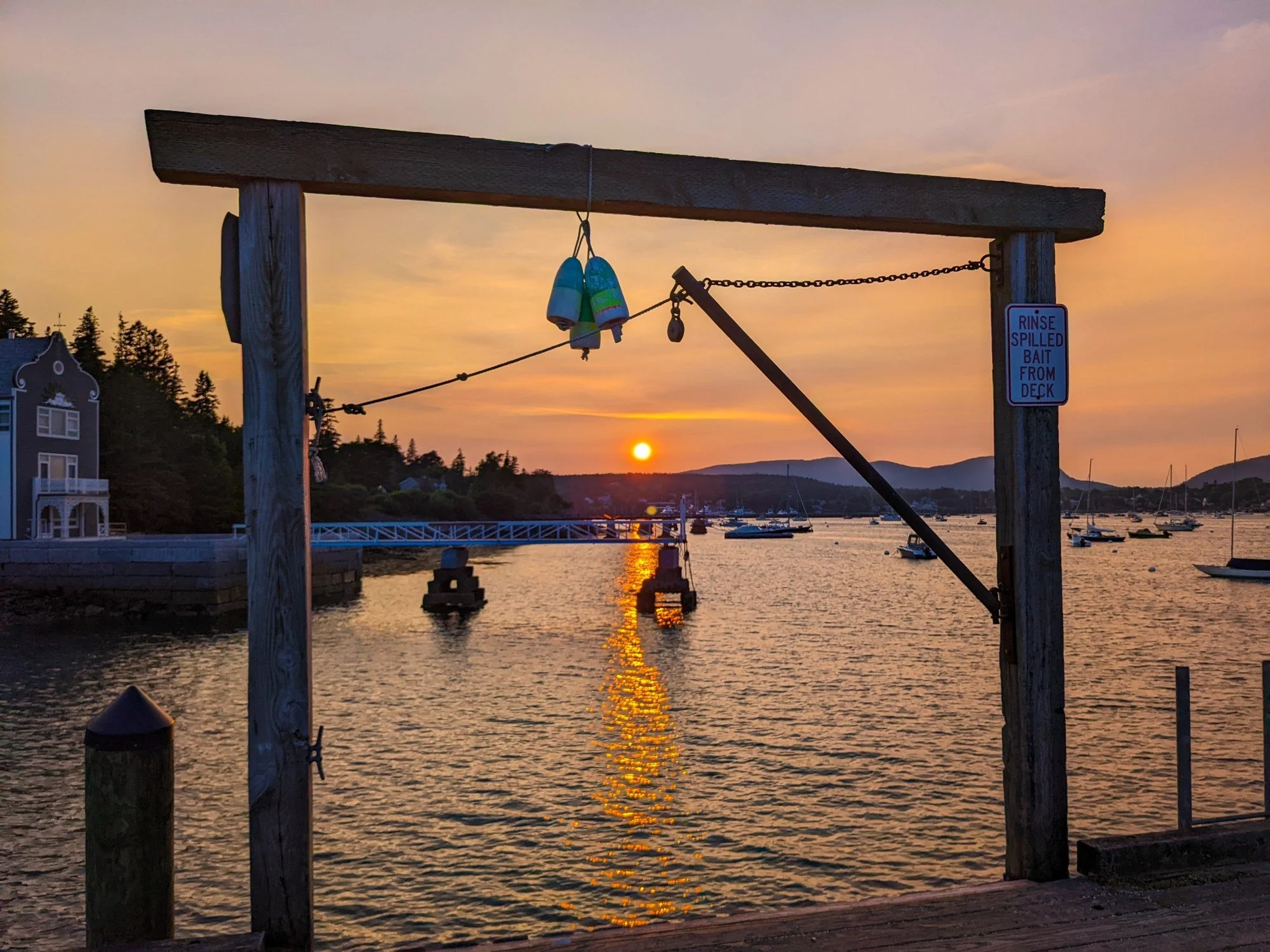
Manset has become one of those places that feels tied to the rhythm of my life now. The dock, the boats, the moorings, the smell of bait and saltwater, the small routines of coming and going — all of it belongs to the working side of Mount Desert Island.
At sunset, even the practical things become beautiful. A bait hoist, a warning sign, old pilings, skiffs, and moored boats all turn into part of the frame. It is not polished or staged, and that is why I like it. Manset is real harbor, and sometimes the light catches it just right.
The Stone Room
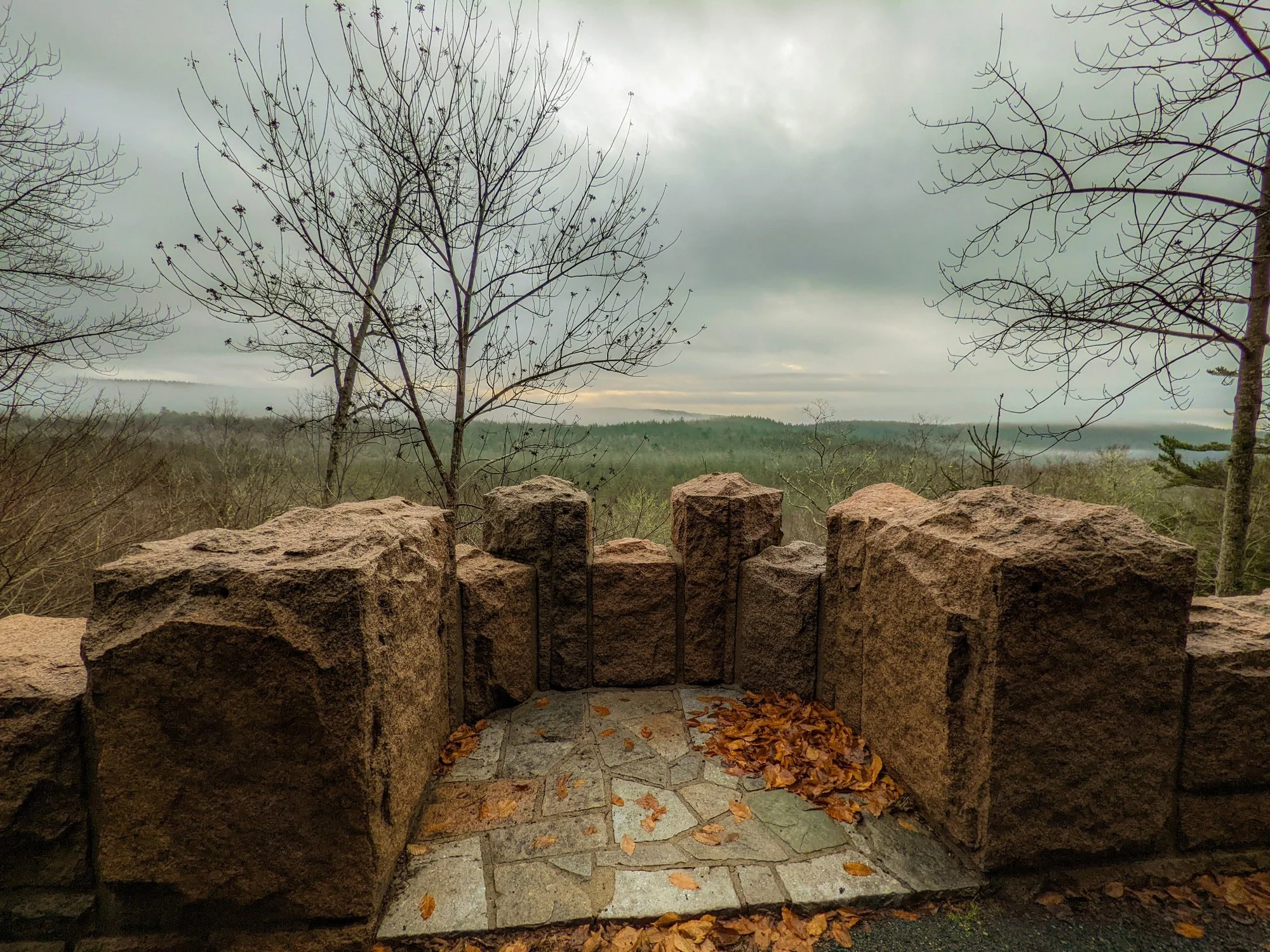
There are places in Acadia that feel less like overlooks and more like rooms somebody built for the weather.
This one has walls of granite, a floor of stone, and just enough space to stand there alone with the wind. No furniture, no roof, no warmth except the last brown leaves gathered in the corner like they were waiting out the season too.
I like places like this because they don’t try too hard. The view is there, but it isn’t shouting. The ocean is off in the distance. The woods are quiet. The sky is low and gray, the kind of Maine sky that makes everything feel older than it is.
It feels like a place to pause, not pose. A little stone room on the edge of the mountain, built for looking out and remembering that sometimes the best views are the ones that make you go quiet.
The Tree That Wore the Light
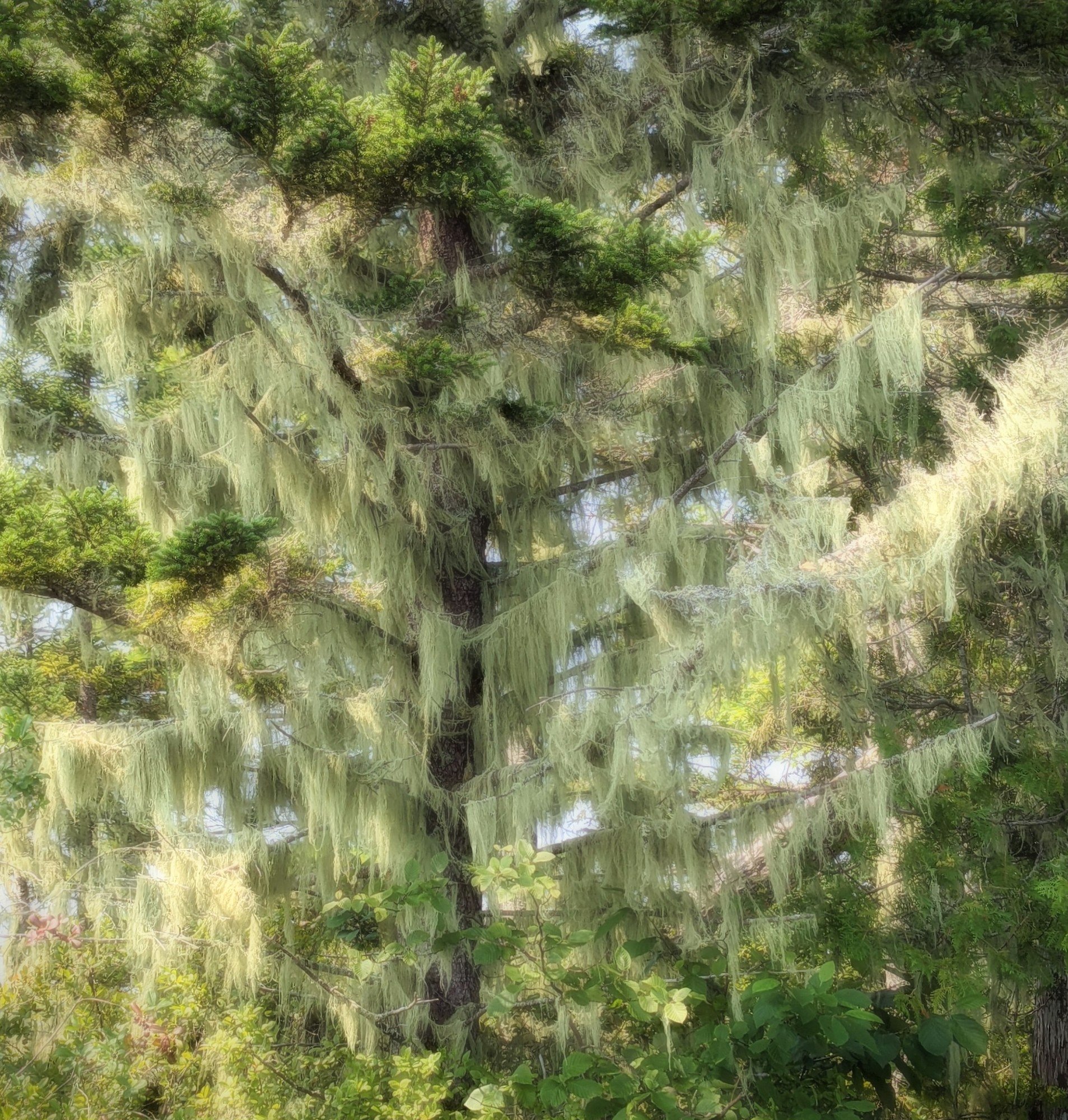
I caught this one from a kayak on Somes Pond in Somesville, and it stopped me the way quiet things sometimes do.
It was just a tree, really — an old evergreen draped in lichen, standing back from the water like it had been there long before any of us thought to paddle by. But the light was hitting it just right, turning all that pale hanging moss into something almost ghostly. Not dead, not spooky exactly, just old. Ancient-feeling. Like the tree had dressed itself in the weather.
That is one of the gifts of being on the water. You move slow enough to notice things you would walk right past. A branch. A reflection. A curtain of lichen glowing in the sun. Something half-hidden in the woods that suddenly feels like the whole point of the day.
Somes Pond has that kind of stillness. It does not need a big view to be beautiful. Sometimes it gives you one tree, one patch of light, and lets that be enough.
Fire on the Algerine Coast
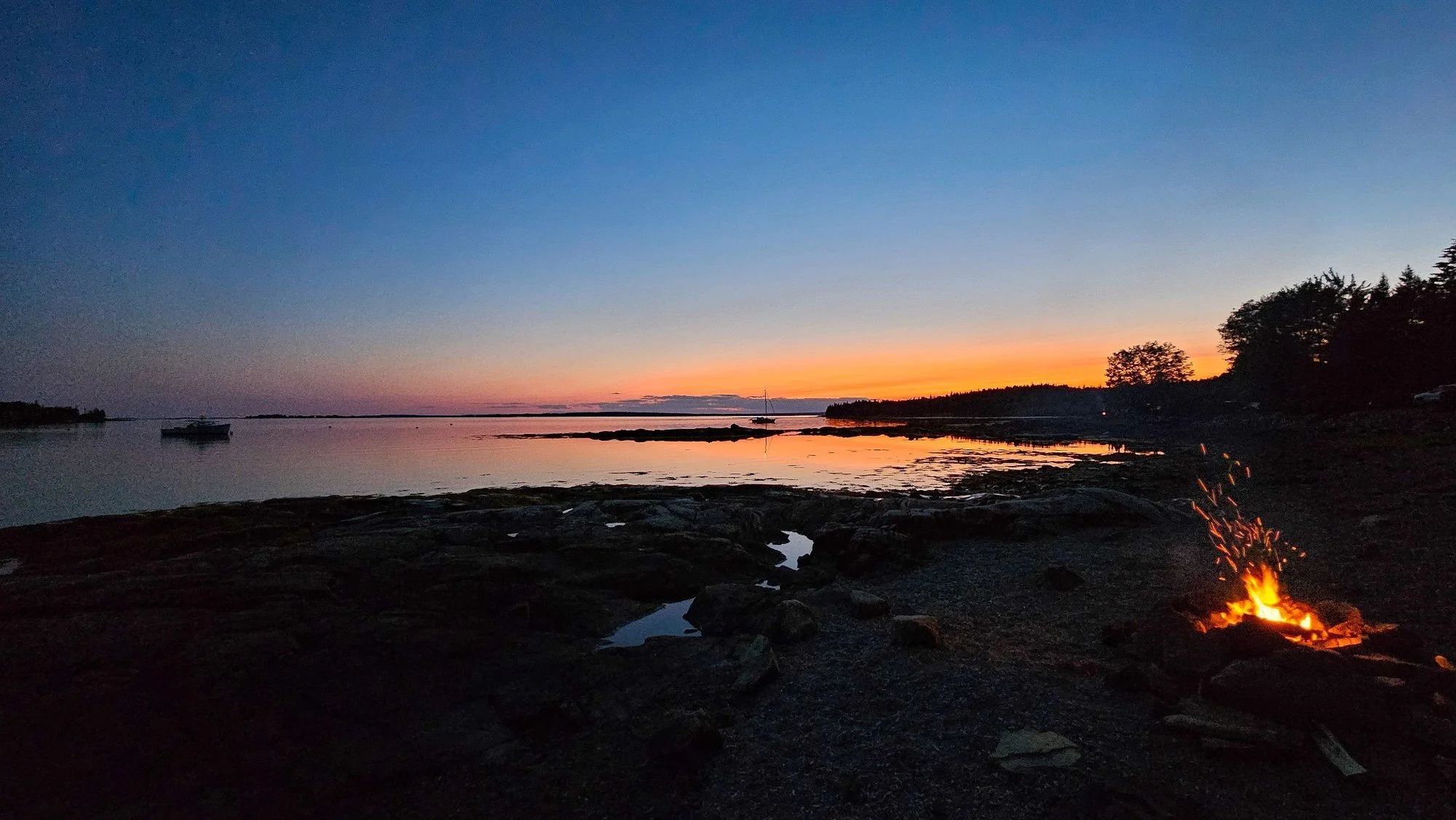
This is Seal Cove, but if you grew up around here, you know it as the Algerine Coast.
There is something about a fire beside salt water that feels older than memory. The day is almost gone, the boats have settled into their silhouettes, and the last orange light is stretched thin across the cove. Everything else is going dark, but the fire is still talking.
That is what I love about this part of Maine. It does not need to be polished up. A rocky shore, a few boats, a local name that sounds half-myth and half-directions, and suddenly you are standing inside a story that was here before you got there.
The Algerine Coast is one of those names that carries its own weather. It sounds like trouble, beauty, and home all at once. And on a night like this, with the tide low and the sky fading and sparks lifting into the dark, it feels like exactly the right name.
The Dock Owner
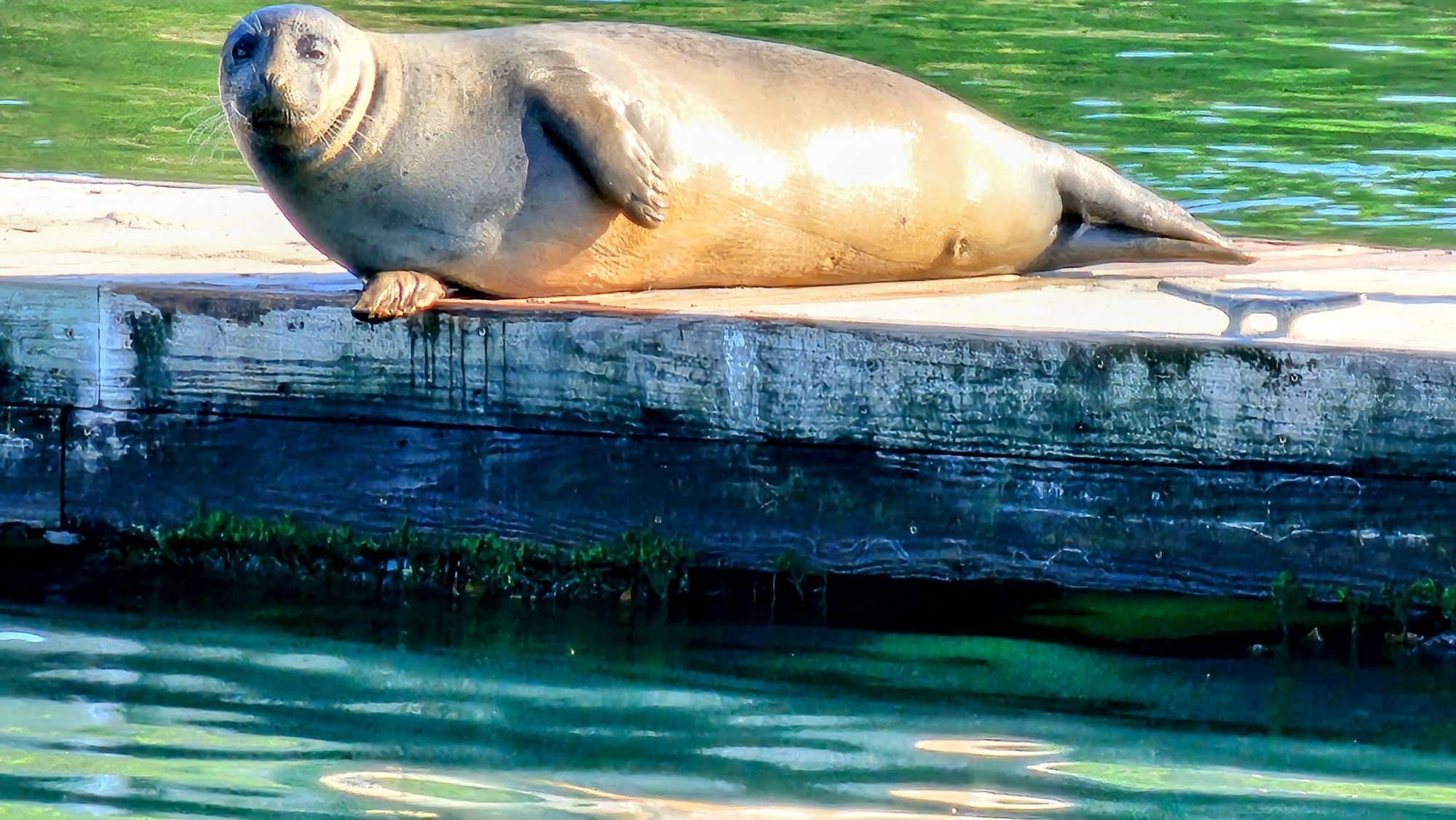
This seal looked like it had paperwork proving the dock belonged to him.
I caught him in Southwest Harbor, stretched out in the sun with that half-curious, half-unimpressed look seals seem to have mastered. Like he had seen boats, tourists, cameras, weather, and all the usual human fuss, and none of it was worth moving for.
There is something funny and perfect about seals around the harbor. They are wild, but they also seem completely at home among the docks and moorings. Not tame. Not pets. Just locals of a different kind, using the same working waterfront in their own quiet way.
That is part of what I love about coastal Maine. The line between human life and wild life is always thinner than we think. One minute you are looking at ropes, cleats, pilings, and boats. The next, there is a seal lying there like he punched in early and claimed the best spot in town.
Song Sparrow Morning
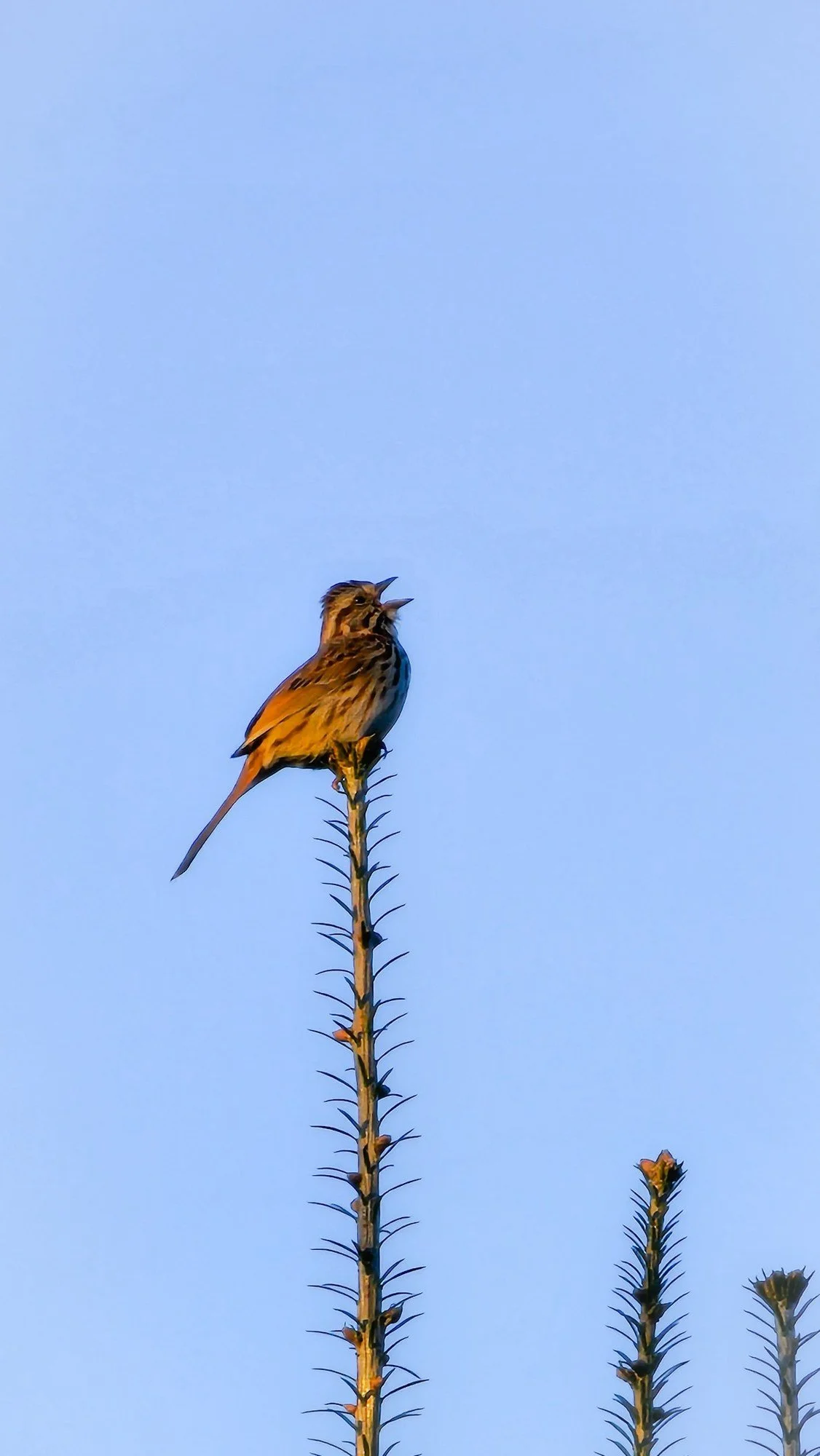
This was right at my house in Southwest Harbor — a Song Sparrow balanced on the top of a young spruce, singing like the whole morning depended on him.
That is one of the things I love about living here. You can go looking for Acadia in all the obvious places — the cliffs, the ponds, the carriage roads, the harbors — but sometimes Maine comes to you in your own yard, lit up by first light and standing on a spruce tip.
Song Sparrows are common enough that it would be easy to stop seeing them. But when one is up there singing his heart out against a clean blue sky, common does not feel like the right word. He feels like a herald. Like a tiny brown announcement that spring is coming whether you are ready or not.
There is beauty in that kind of ordinary. The familiar bird. The little tree. The morning light. The same yard you walk through every day, suddenly made new because something small decided to sing.
Still Standing at Seawall
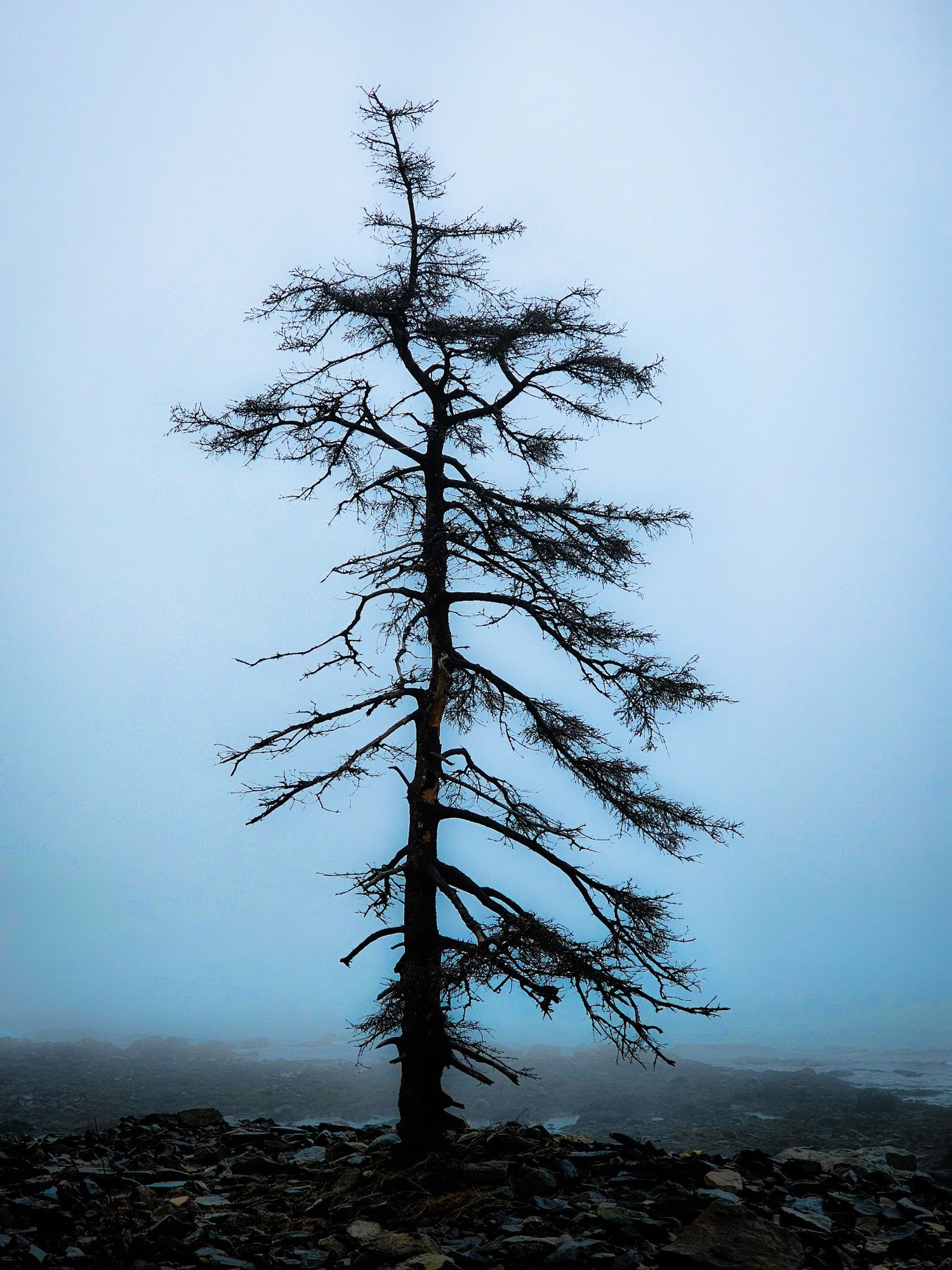
This is Seawall, where the coast feels a little rougher and the weather seems to have more of a say.
I love this tree because it looks like it has taken everything the ocean could throw at it and decided to stay anyway. Wind, salt, fog, winter, storms — all of it written into those bare crooked branches. It is not a pretty tree in the postcard sense. It is better than that. It has character.
The fog makes the whole place feel half-real, like the shore is disappearing behind it and this one dark tree is the last thing holding the world in place. No big sunset, no dramatic color, just stone, mist, ocean, and a stubborn old spruce standing where it probably should not.
That feels very Maine to me. Not soft exactly, but beautiful in the way hard things can be beautiful when they endure.
Held in Ice
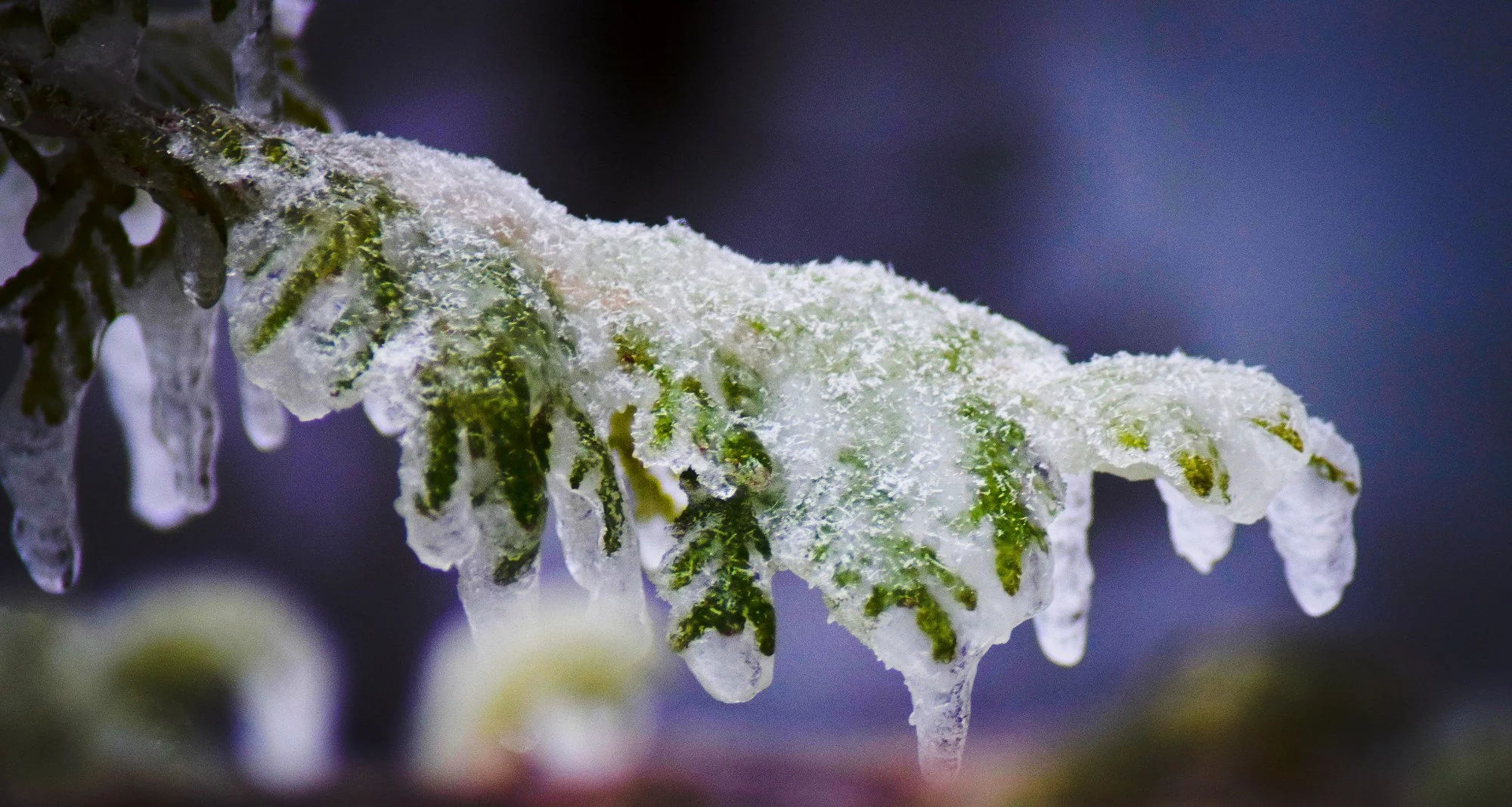
This was taken in Acadia National Park, one of those winter moments where the small things become the whole photograph.
It is just a branch, really — a little piece of evergreen caught in ice. But there is something beautiful about the way it is held there. The green still shows through, alive underneath all that frozen glass, like the tree is waiting out the weather instead of giving in to it.
Maine winter can make everything feel locked up for a while. The trails get quiet, the colors go muted, and even the trees seem to lower their heads. But then you look closer and find this — needles still green, shape still delicate, life still present under the cold.
I like this one because it feels patient. Not dramatic, not loud. Just a small frozen thing in Acadia, reminding me that winter does not stop the world. It only asks it to hold still for a little while.
Blue Hour in Southwest Harbor
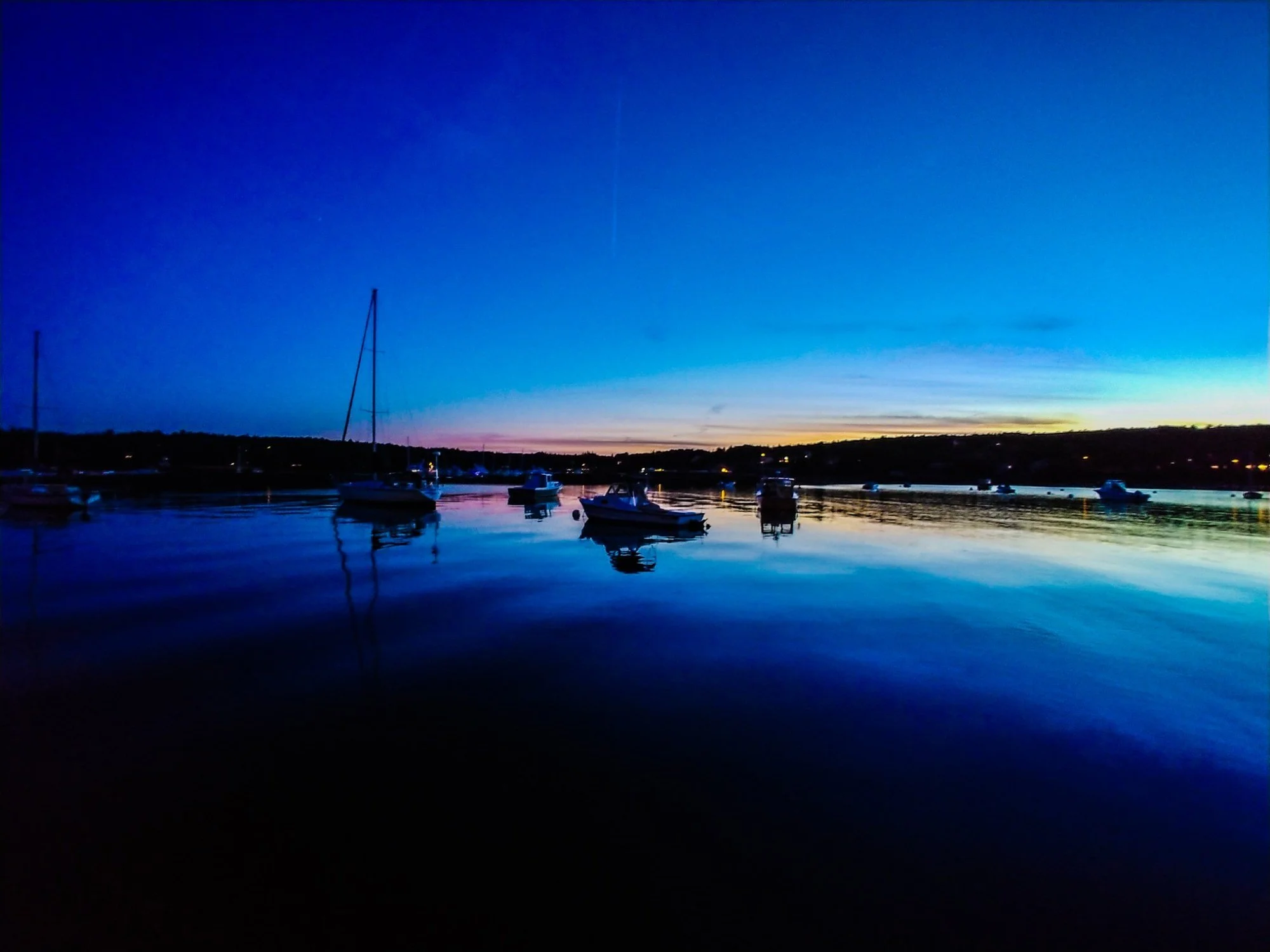
Southwest Harbor has a way of going quiet after the day is done.
The boats settle into their moorings, the water turns dark and glassy, and the last of the sunset holds on as a thin line of color above the far shore. Everything else becomes blue — the sky, the harbor, the reflections, even the silence.
I like this time of day because it feels like the coast is exhaling. The workboats are done moving. The pleasure boats are still. The noise drops away. For a few minutes, the whole harbor seems to belong to the light.
This is the Maine I carry with me: not just the bright postcards and summer crowds, but these blue, quiet moments when the water holds the sky and the town feels like it is resting.
Just Outside Manset
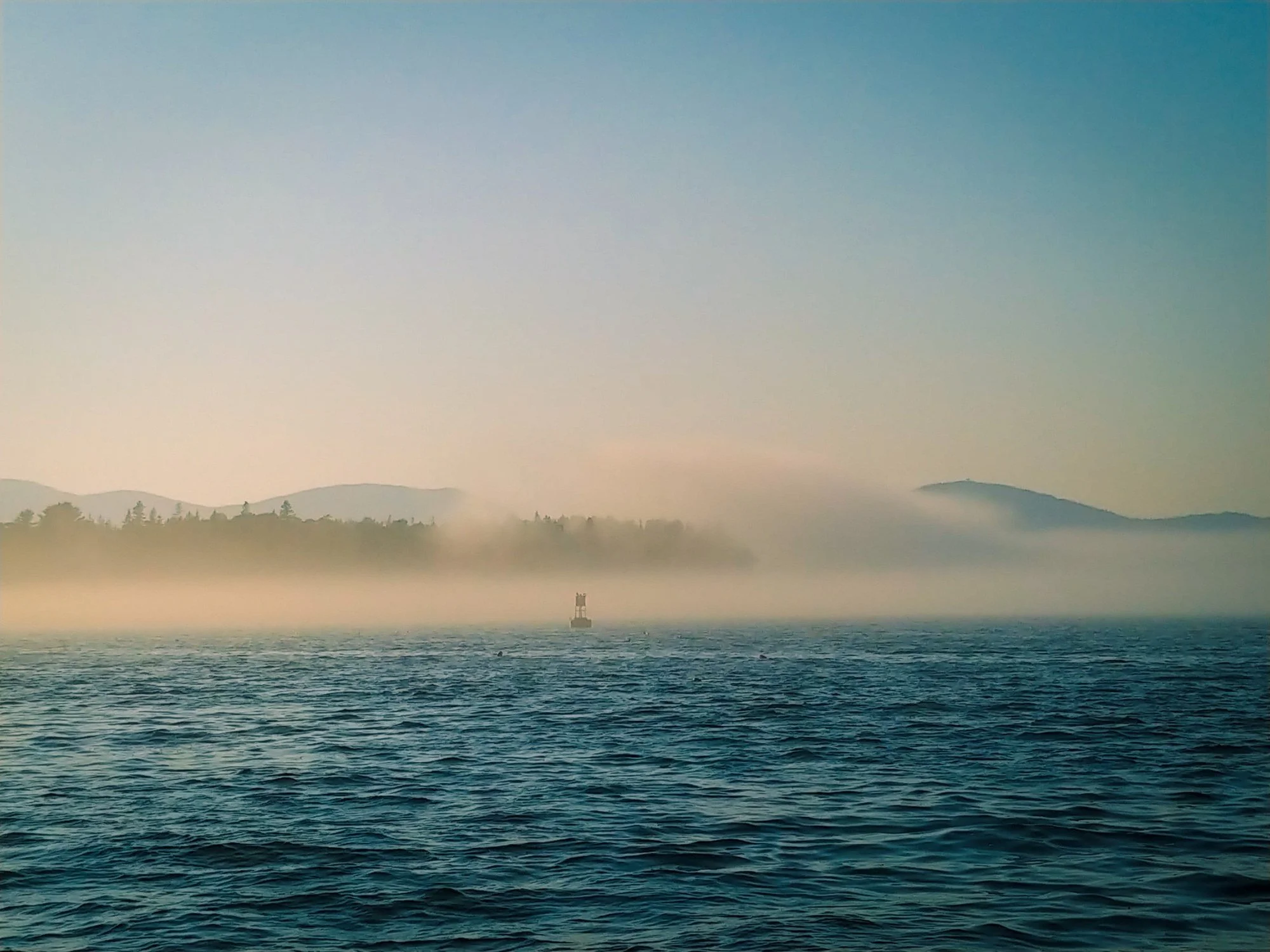
This was just outside of Manset, where the water can change moods faster than you can explain it.
The fog was hanging low over the harbor, not hiding everything completely, just softening it. The hills were still there. The shoreline was still there. But they looked farther away than usual, like the whole place had slipped half a step into a dream.
I love that about the Maine coast. One minute it is sharp and bright and practical — boats, ledges, markers, tide. Then the fog comes in and the same familiar water turns mysterious. Even a buoy out there starts to feel like a tiny witness, standing its watch while the world disappears around it.
Manset has always felt like one of those working edges of Acadia, not polished, not staged, just real. And on a foggy evening like this, it becomes something else too — quiet, blue, and almost secret.
Golden Water at Seal Cove
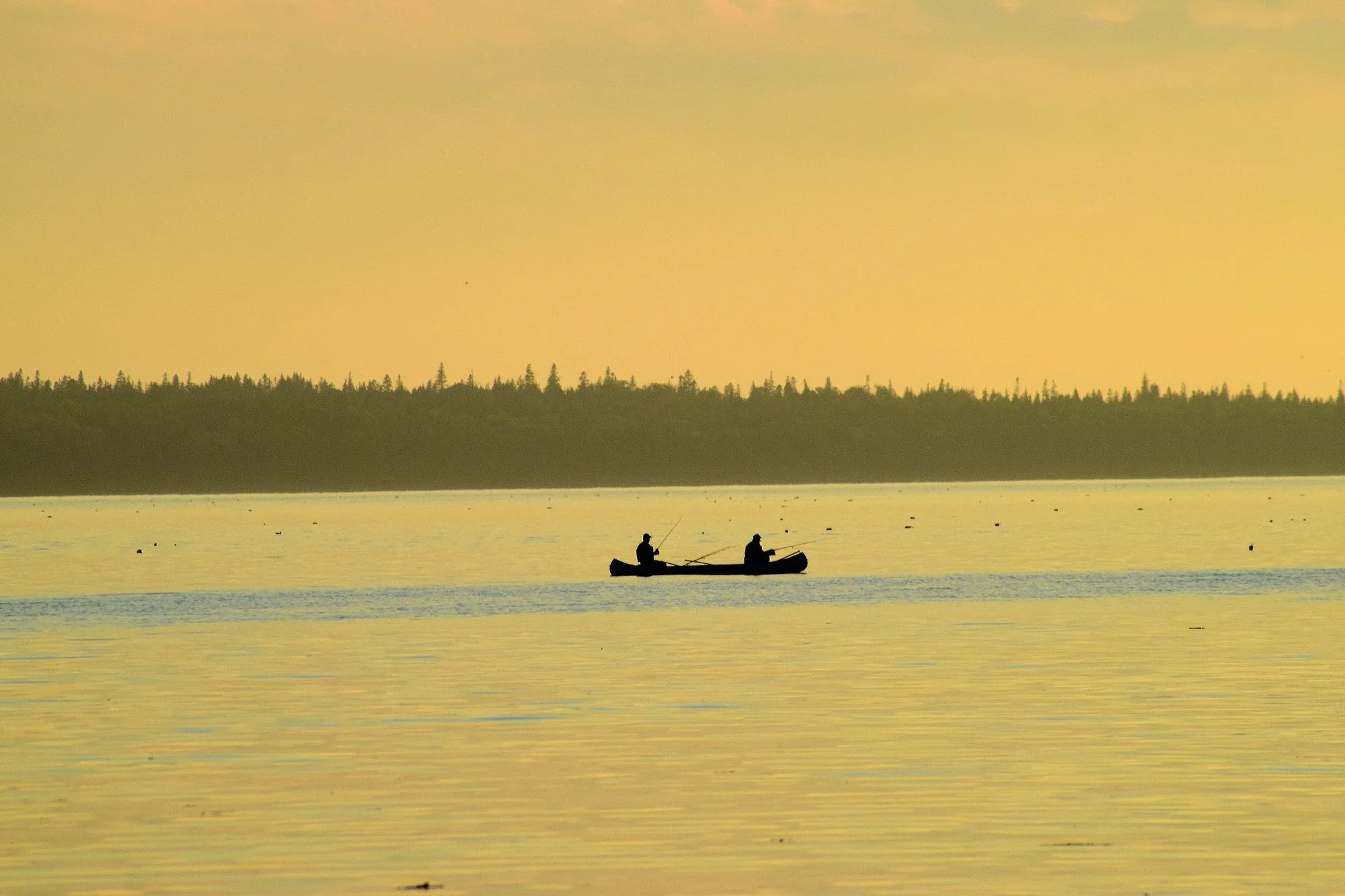
This is Seal Cove in one of those golden moments when the whole place seems to go soft.
The water, the sky, the far tree line — everything is washed in that warm evening light. Then there is the canoe, small and dark against all that brightness, moving quietly through the middle of it like it belongs to another time.
I love photographs like this because they feel simple at first. A canoe. Two people. A cove. But the longer you look, the more it feels like memory. Not a big event, not a dramatic story, just the kind of Maine evening that gets stored somewhere deep and comes back years later when you least expect it.
Seal Cove can do that. It can turn ordinary water into gold for a few minutes and make a small boat feel like the only thing in the world.
The Twins
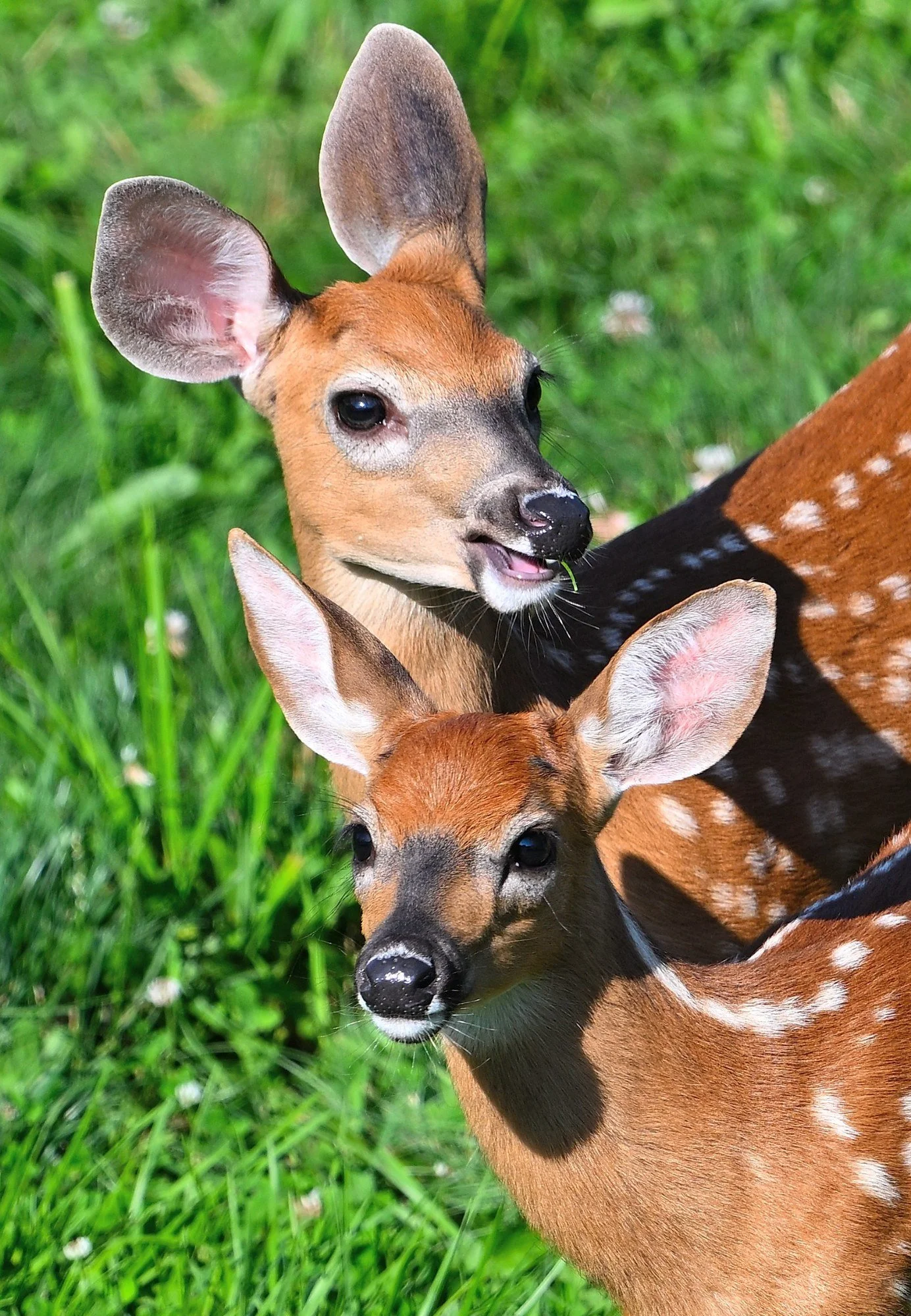
These are the twins.
They were born in my backyard in 2025, which already makes them feel less like visitors and more like part of the place. For a while they were tiny and spotted and impossible not to watch. Then, like fawns do, they grew just enough to look both wild and familiar at the same time.
They still come back. And I know it is them because their mother has this odd little blinking response when she gets nervous — a kind of tell — and one of the twins has it too. That is the sort of thing you only notice after sharing space with an animal for a while. Not taming it. Not owning it. Just learning the small signs.
I love this photo because it feels personal without being sentimental. Two young deer, bright grass, summer light, and that look they give you when they are deciding whether you are harmless or not. They were born here, and every time they come back, the yard feels a little less like mine alone.
When the Air Looks Frozen
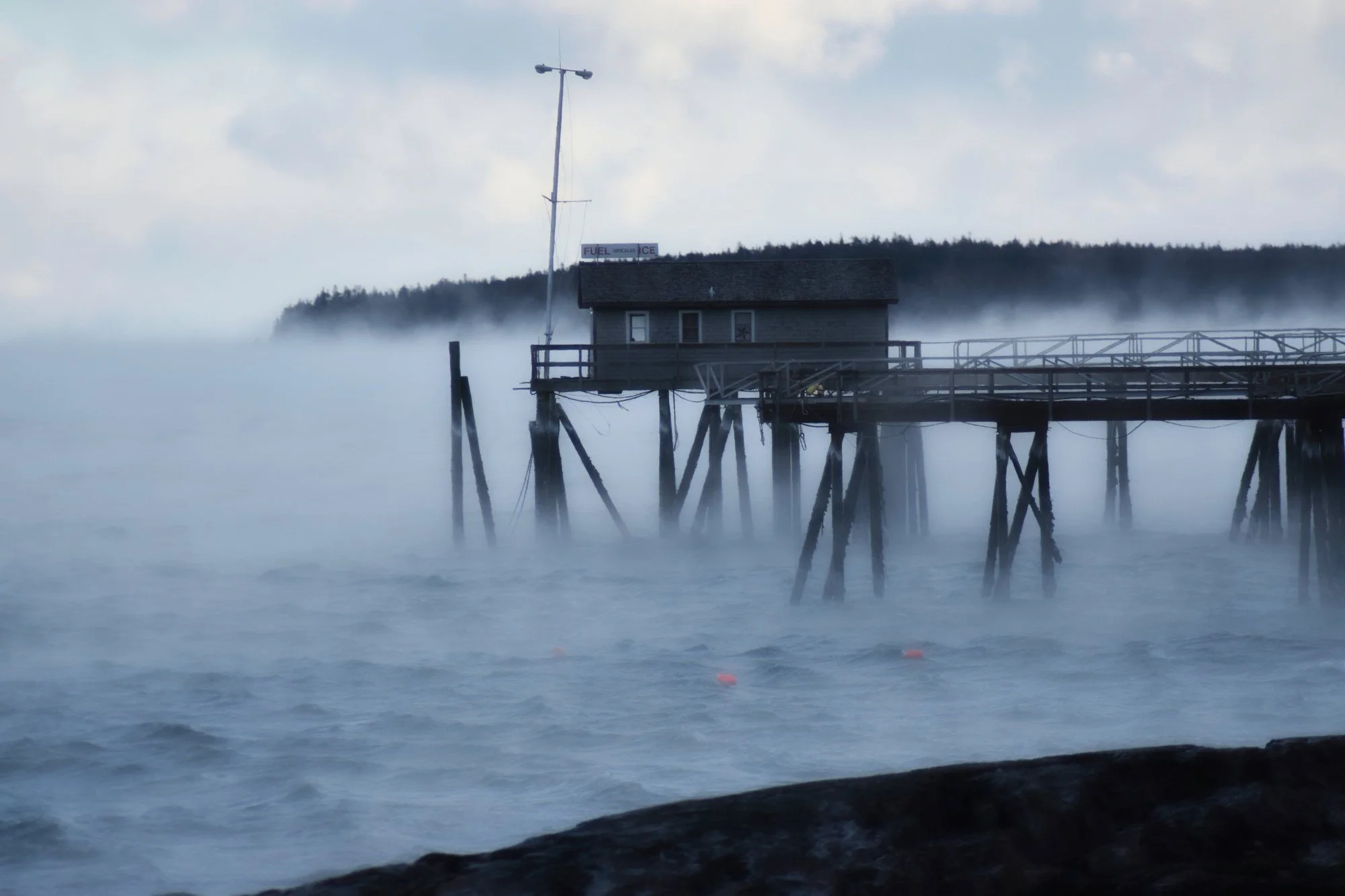
Sometimes in winter, Maine does not just get cold. It gets warning-cold.
The kind of cold where the forecast starts talking about wind chill advisories, where the temperature is already brutal before the wind gets involved, and then the gale comes in off the water and makes it feel like the air itself has teeth.
This was the Hinckley dock in Manset. The air temperature was around twenty below, and the wind was driving sea smoke across the harbor so hard it looked less like fog and more like the ocean being torn apart and thrown through the pilings. Everything was moving — the water, the mist, the cold — except the dock, standing there in the middle of it like it had seen worse and was not impressed.
That is a particular kind of Maine beauty. Not warm, not gentle, not asking to be liked. Just raw winter on salt water, showing you what it can do.
Bracy Cove at the Edge of Evening
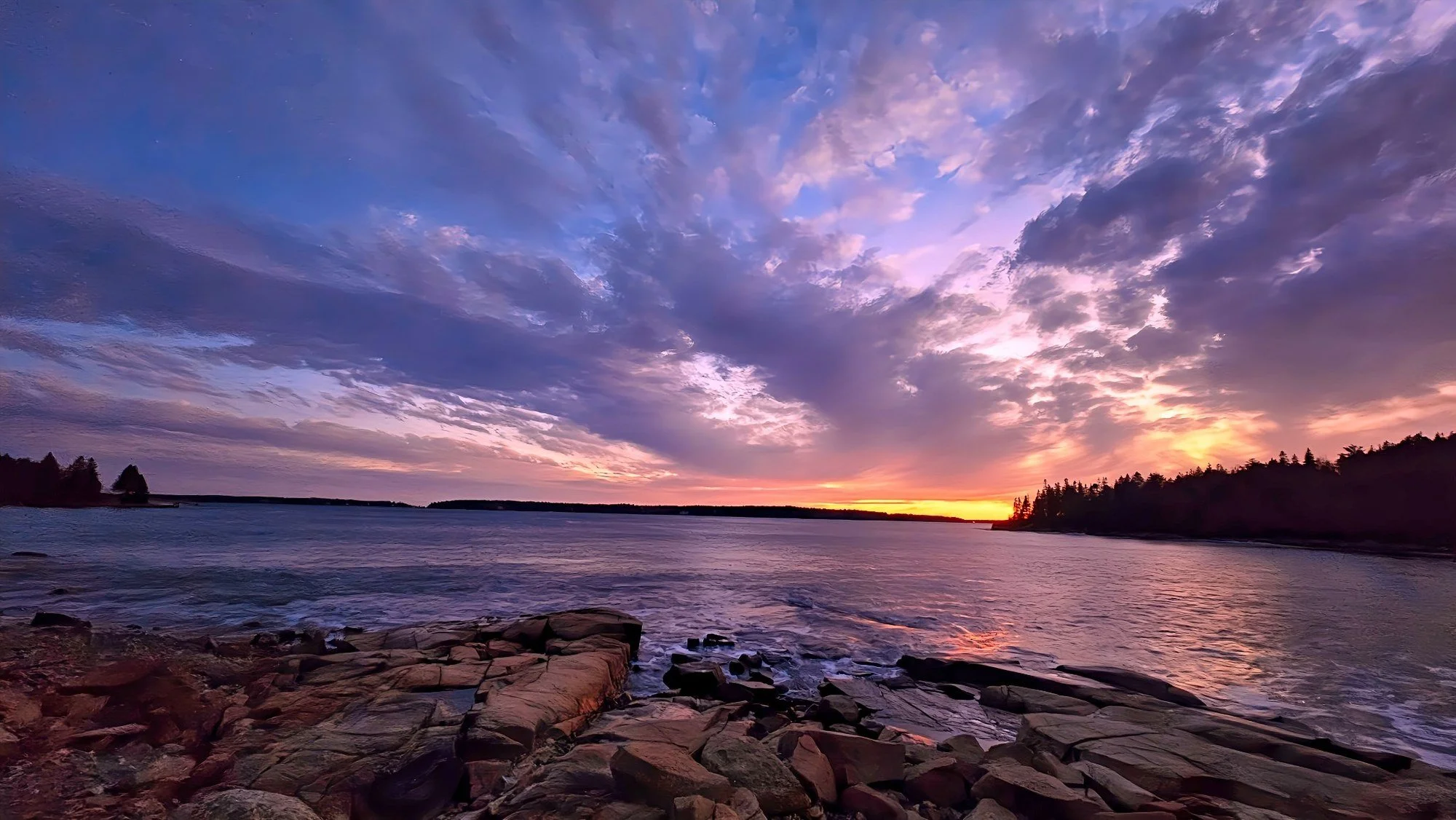
This is Bracy Cove, tucked between Seal Harbor and Northeast Harbor, and on this evening the sky decided to make a production of it.
The clouds were stretched wide over the water, purple and blue and pink all at once, with the last fire of the day burning low on the horizon. The rocks in the foreground felt old and solid, like they had seen a thousand sunsets and still knew enough to sit still for this one.
I like this part of Acadia because it feels a little quieter than the places everyone talks about. Not hidden exactly, but not shouting for attention either. You can stand there between two well-known harbors and feel like you found a small pocket of the coast that belongs mostly to weather, tide, and light.
Some sunsets are just pretty. This one felt bigger than that — like the whole cove had opened up for a few minutes, and all you had to do was be there before it closed again.
Heaven in a Raindrop
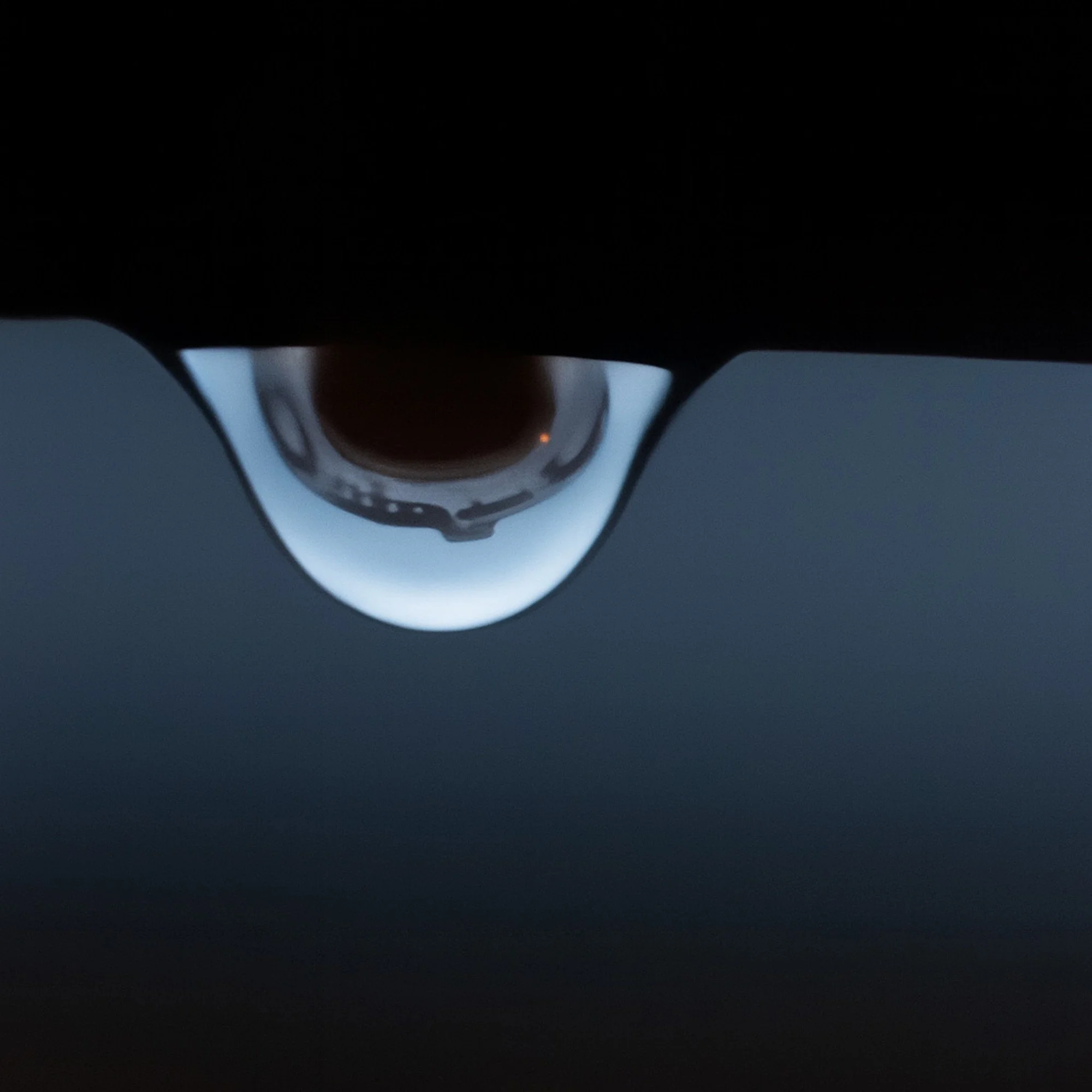
I love this one because it is almost nothing — just a raindrop hanging from the edge of my deck table.
But if you look at it long enough, it stops being nothing. It starts to look like an eye, with an iris and a pupil and a little secret world held inside it. And there, upside down in the curve of the drop, is the house — small, bent, and somehow more mysterious because it is caught in water.
It reminds me of that old idea from Auguries of Innocence: seeing a world in a grain of sand, and heaven in a wild flower. The same thing can happen in a raindrop, I think. Something ordinary, something you could wipe away without a thought, suddenly holds the whole place inside it.
That is what photography does when it is working. It does not always need mountains or oceans or dramatic light. Sometimes it just asks you to look closer at the table after the rain, and there is the world, hanging there, upside down.
Last Light at Seawall
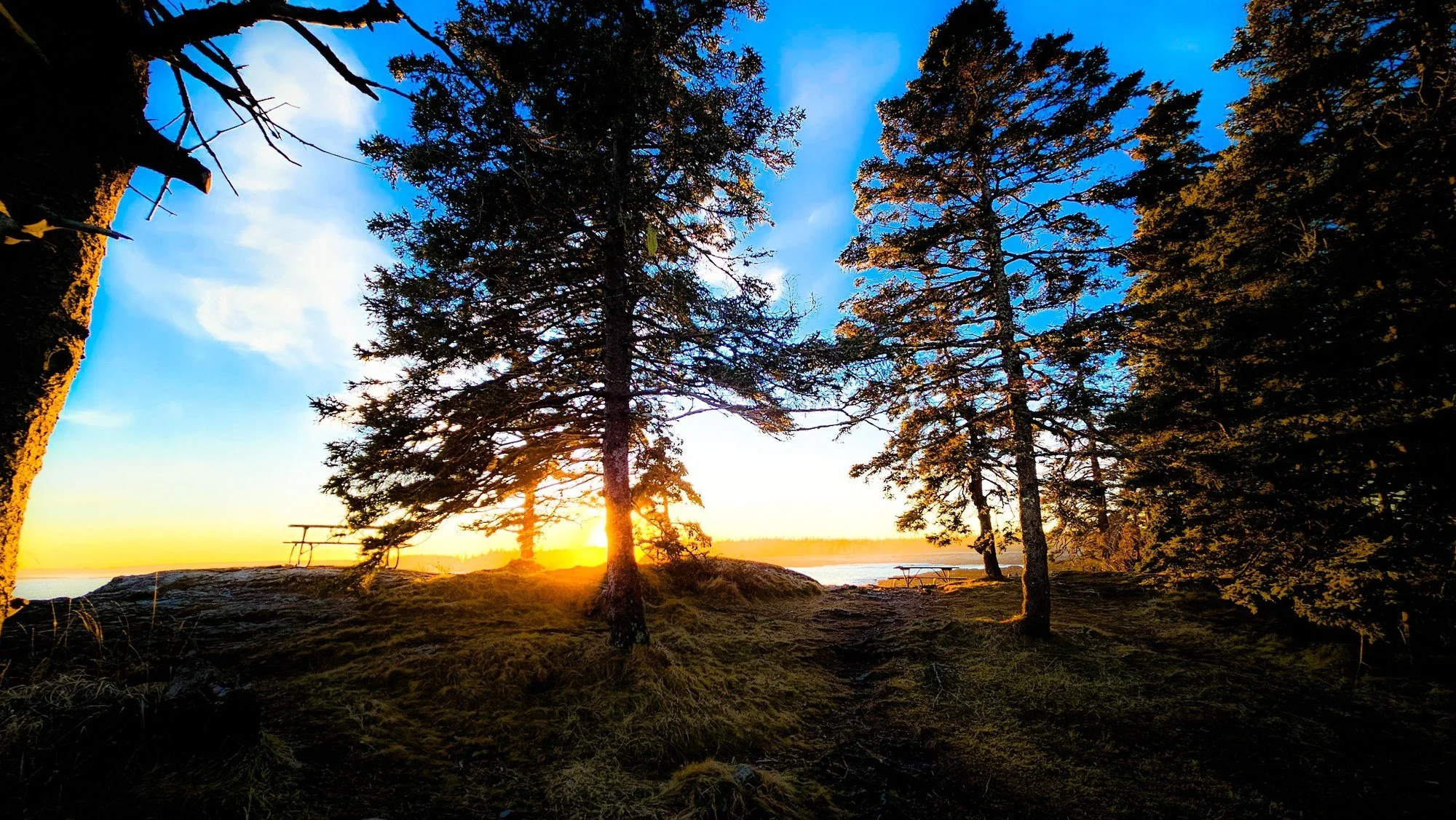
This is sunset at Seawall, when the light comes in low through the spruce trees and makes the whole place feel like it is glowing from the ground up.
I love how the path pulls you toward the water, but the trees make you slow down first. They stand there dark and wind-shaped, catching the last gold of the day along their edges. Beyond them is the shore, the picnic tables, the open water, and that thin bright line where the sun is leaving.
Seawall has a different feel from the postcard parts of Acadia. It is rougher, quieter, more honest somehow. The rocks, the spruce, the salt air — nothing there feels arranged for you. You just arrive, and if the timing is right, the place gives you something like this.
A few minutes later the light would be gone. That is always the deal with sunsets. You do not keep them. You just stand there while they happen, and hope some part of you remembers the color.
Better Than on the Town
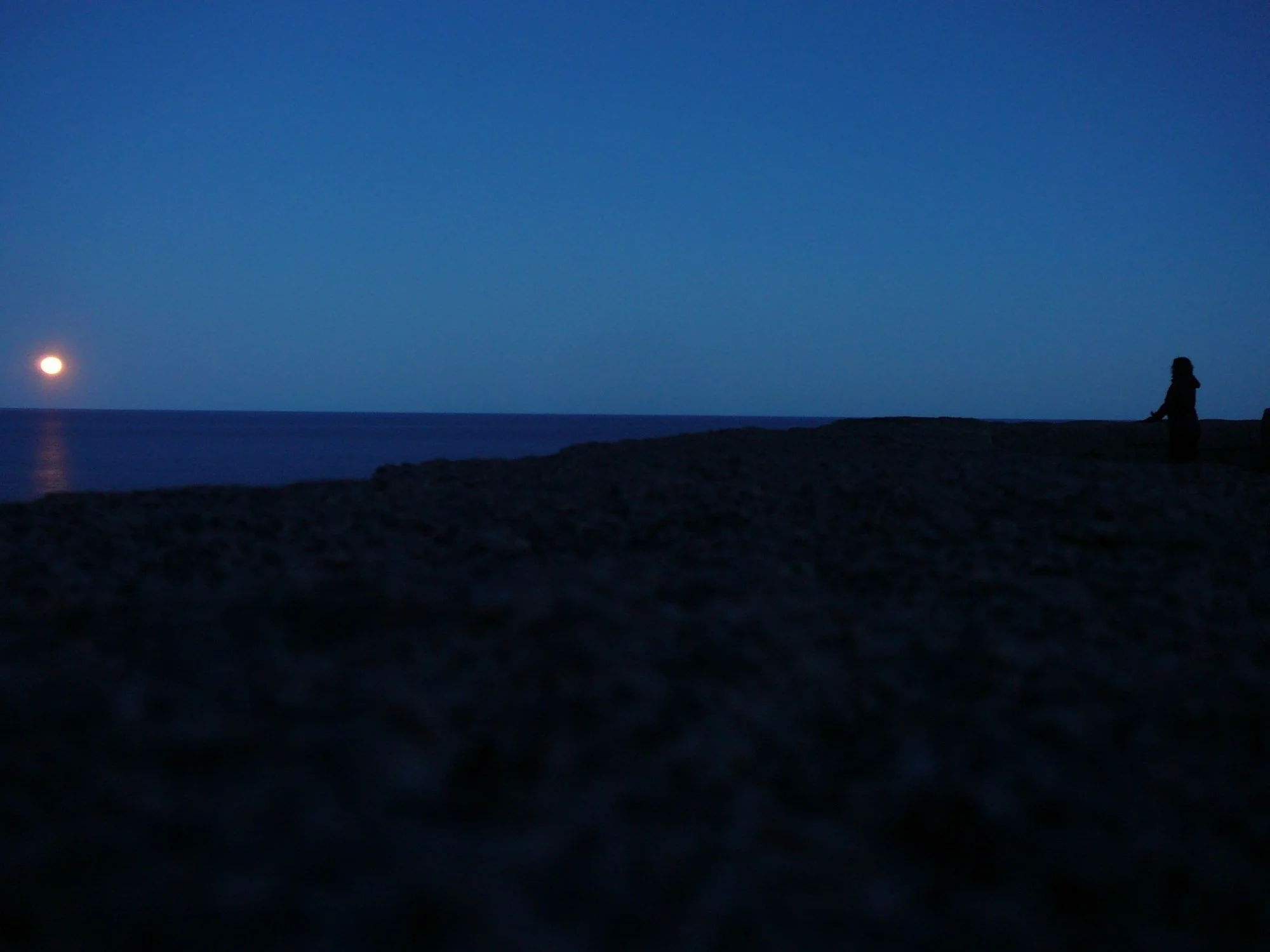
This is Otter Cliffs Overlook in Acadia, after the day had gone blue and the moon had come up over the water.
There is a little figure off to the side, just sitting there in silhouette, which makes the whole thing feel more like a memory than a landscape. The ocean is dark. The rocks are darker. The moon is low and bright, throwing just enough light across the water to make you stop talking for a minute.
I remember posting something along the lines of: roses are red, dirt is brown, a night in the woods is better than on the town. Not exactly Shakespeare, but it was true enough. Some nights do not need much more than rocks, salt air, a moonrise, and the feeling that you are exactly where you should be.
That is one of the things Acadia does best. It reminds you that the good stuff is often simple, quiet, and outside after dark.
Into the Gray
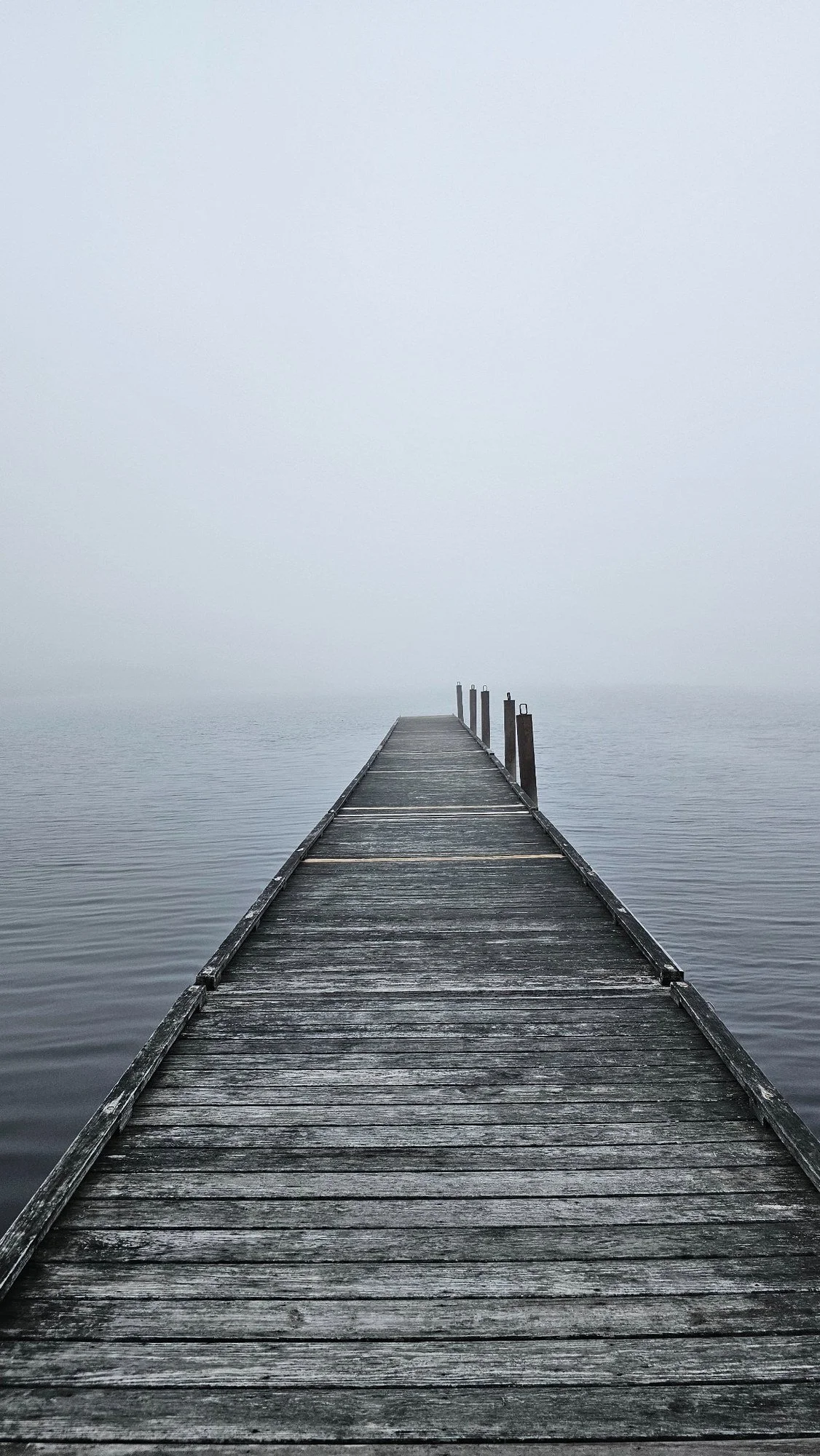
There is something about a dock in the fog that feels like an invitation and a warning at the same time.
The boards lead straight out into nothing — or at least into what looks like nothing. No far shore, no boats, no bright sky to tell you where the world ends. Just weathered wood, still water, and that soft gray wall Maine likes to build when it wants everything to slow down.
I love how quiet this feels. Not empty exactly. More like the whole place is holding its breath. The dock is still there doing its job, reaching out into the water, even when the view has disappeared.
Sometimes that is enough. You do not need to see all the way across. You just need the next few boards in front of you, and the nerve to keep walking into the gray.
Winter Gold at Seawall
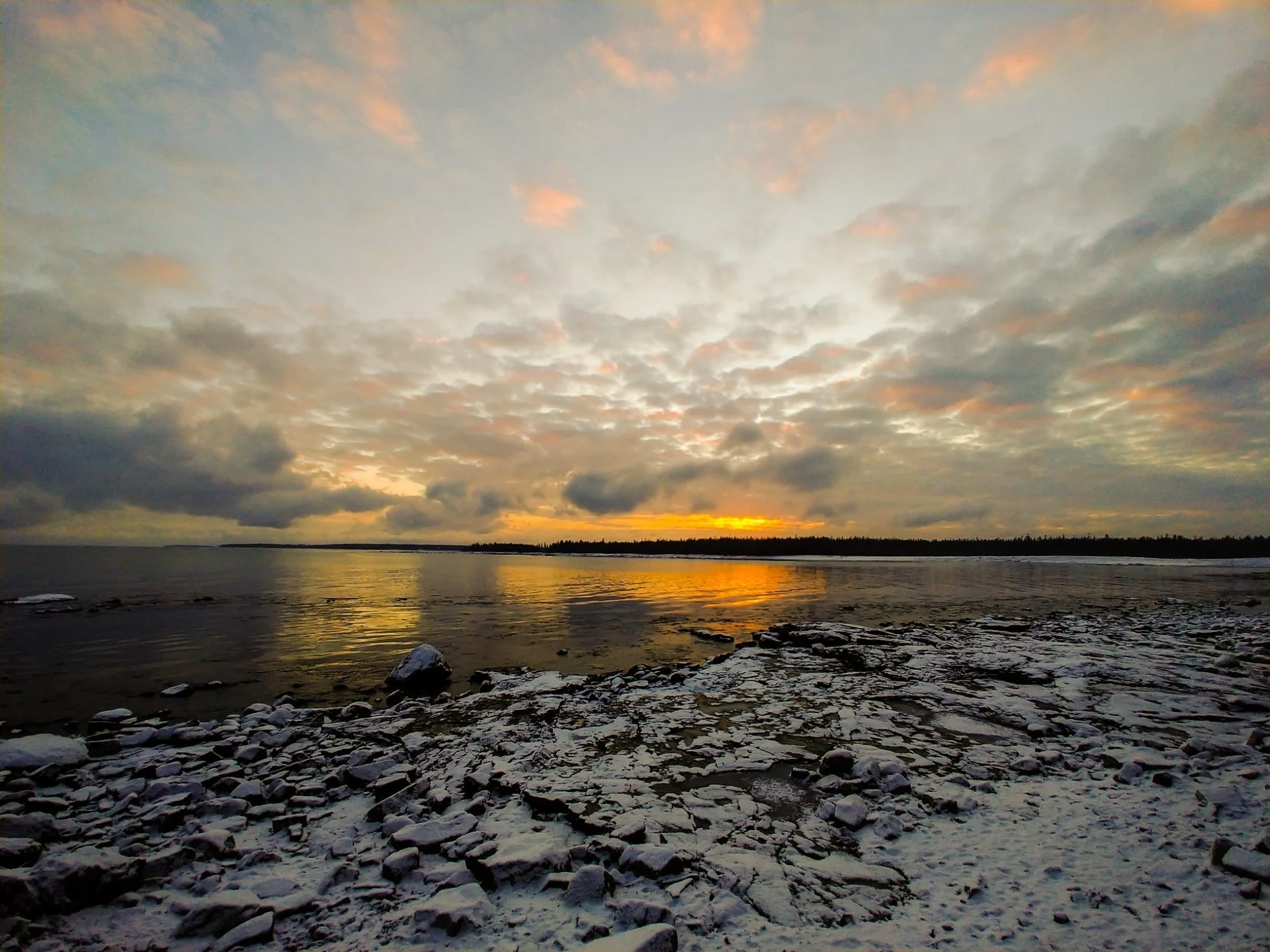
This is Seawall in winter, when the place feels stripped down to its bones.
The rocks are dusted with snow, the shoreline is cold and quiet, and then the sky opens just enough to pour gold across the water. That contrast is what gets me — the hard gray stone, the thin snow, the January cold, and then this warm light showing up like it has no business being there.
Seawall is beautiful in summer, but winter gives it a different kind of honesty. No crowds, no noise, no softness added for comfort. Just ocean, rock, weather, and whatever light the day is willing to give.
I love this one because it feels like a reward for showing up when most people would rather stay home. Maine does that sometimes. It makes you earn the view, then gives you a sunset that feels warmer because everything around it is frozen.
Dock to Still Water
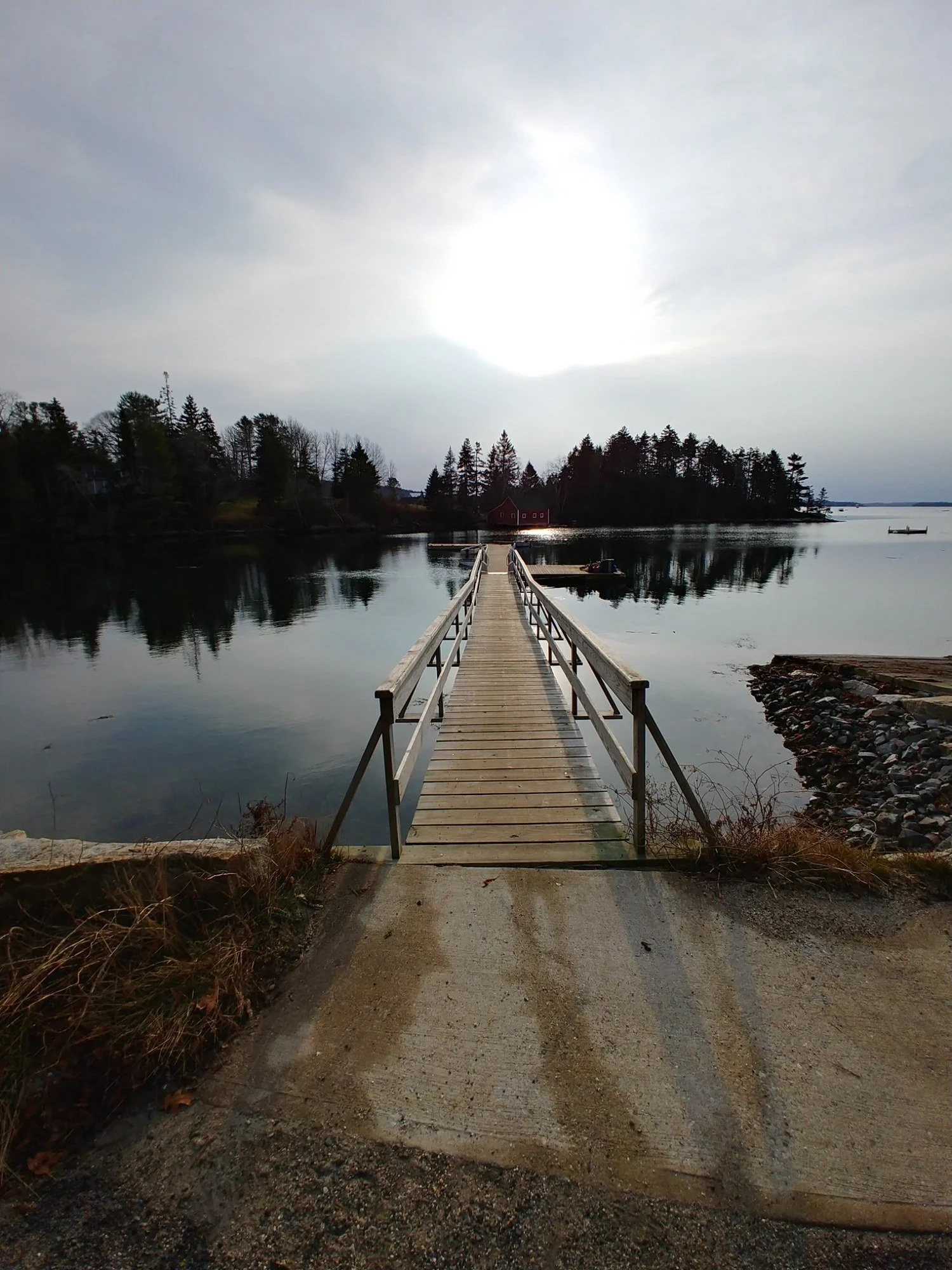
There is something about a dock that always makes you want to keep going.
This one feels like it is leading you straight out of the ordinary day and into the quiet part of the water. The surface is calm, the trees are reflected almost perfectly, and that little red building across the way gives the whole scene just enough color to feel remembered instead of imagined.
I like the light in this one. It is not a clean sunny day. It is one of those pale Maine mornings where the sun is mostly hidden, but still strong enough to turn the water silver and pull long shadows down the dock.
Monarch of the Backyard
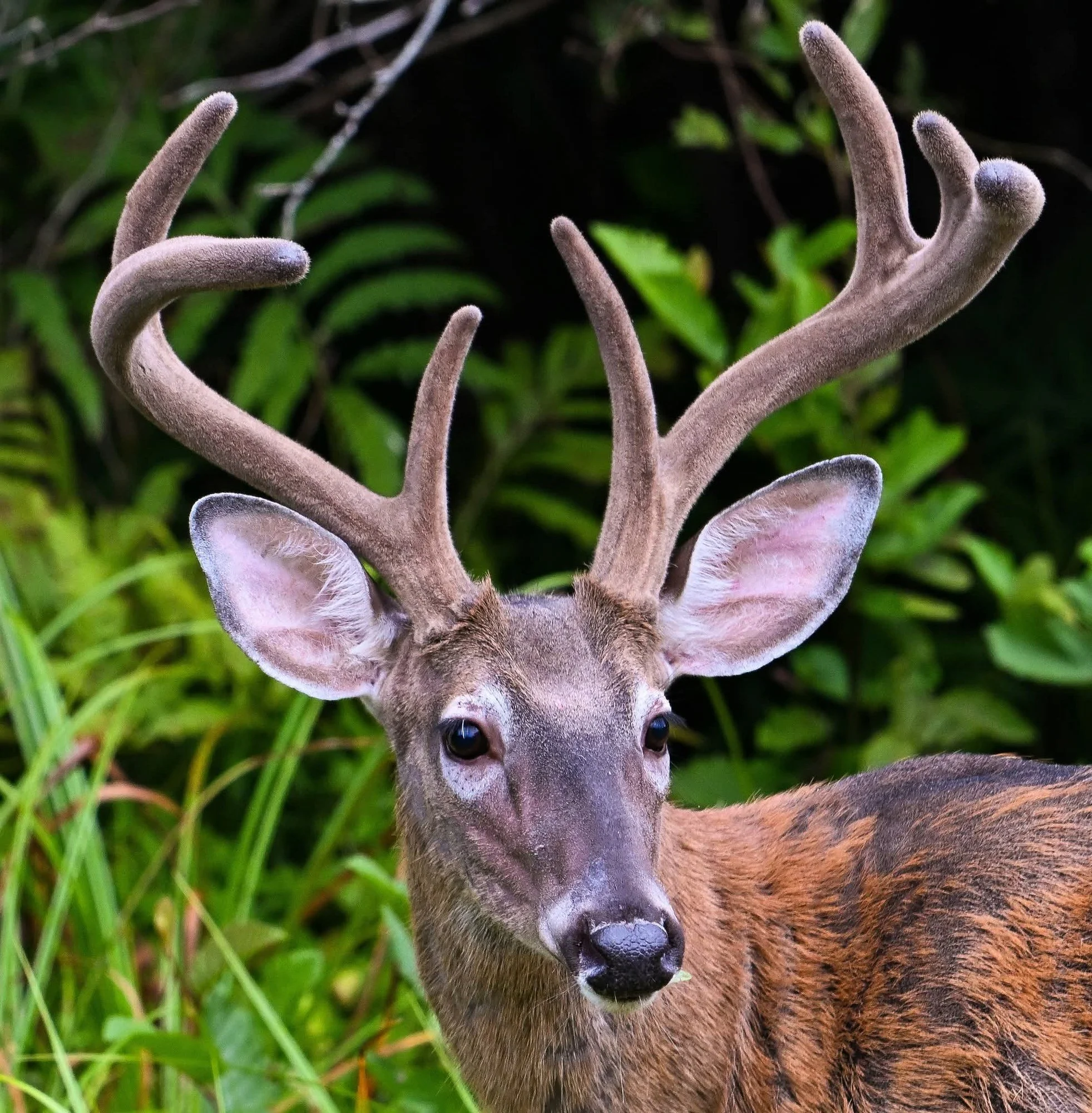
These guys show up in the backyard in November, when the rut turns the woods into a different kind of place.
The rut is the whitetail breeding season, when bucks that spent most of the year staying cautious suddenly start moving with purpose. They roam farther, chase does, challenge other bucks, scrape the ground, rub trees, and sometimes fight for the right to mate. It is wild, restless energy, and you can feel it when they come through.
In the backyard, they move like monarchs. Not pets. Not visitors exactly. More like temporary kings passing through a kingdom that only they fully understand. They posture, chase each other off, disappear into the brush, then come back with that same charged look in their eyes.
I love seeing them this close because it reminds me that the yard is not just a yard. It is part of their map too. For a few weeks in November, the quiet behind the house becomes a stage for something ancient — antlers, instinct, rivalry, and the old pull of the season.
Acadia Mountain
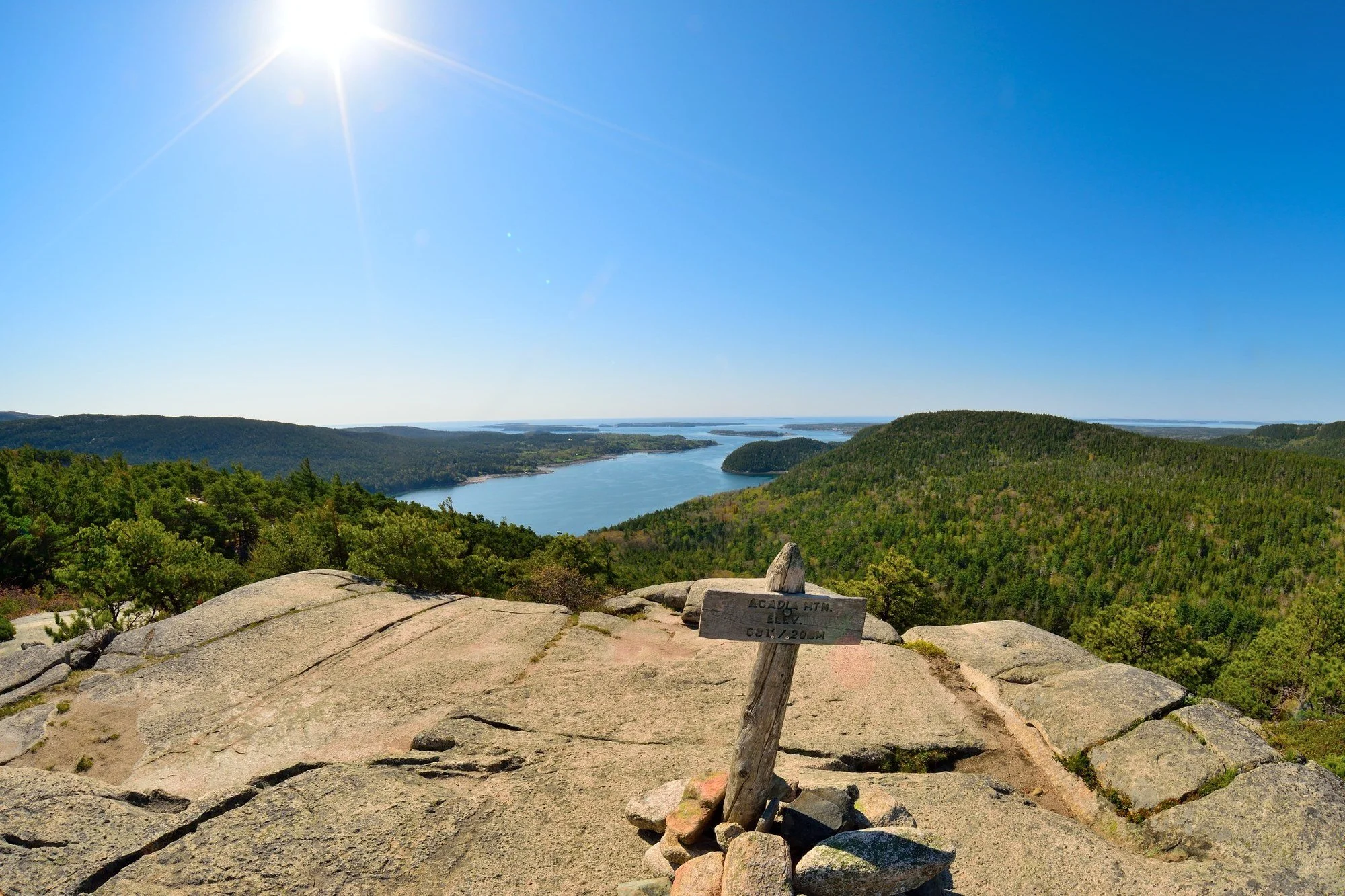
This is Acadia Mountain, one of those hikes that pays you back all at once.
You come up through the woods, work your way onto the open granite, and then suddenly the island drops away in front of you. Somes Sound, forested hills, blue water, far-off islands — the whole western side of Acadia laid out under a big clean sky.
I like that this is not the famous summit everyone talks about first. Acadia Mountain feels a little more earned, a little more personal. The sign is simple, the ledge is bare, and the view does not need any help making its case.
There is something about standing on granite above the water that feels deeply Maine to me. Stone, spruce, ocean, sun, and just enough height to see how all of it fits together.
The Way Things Work Around Here
Reason number I’ve-lost-count why I love Maine.
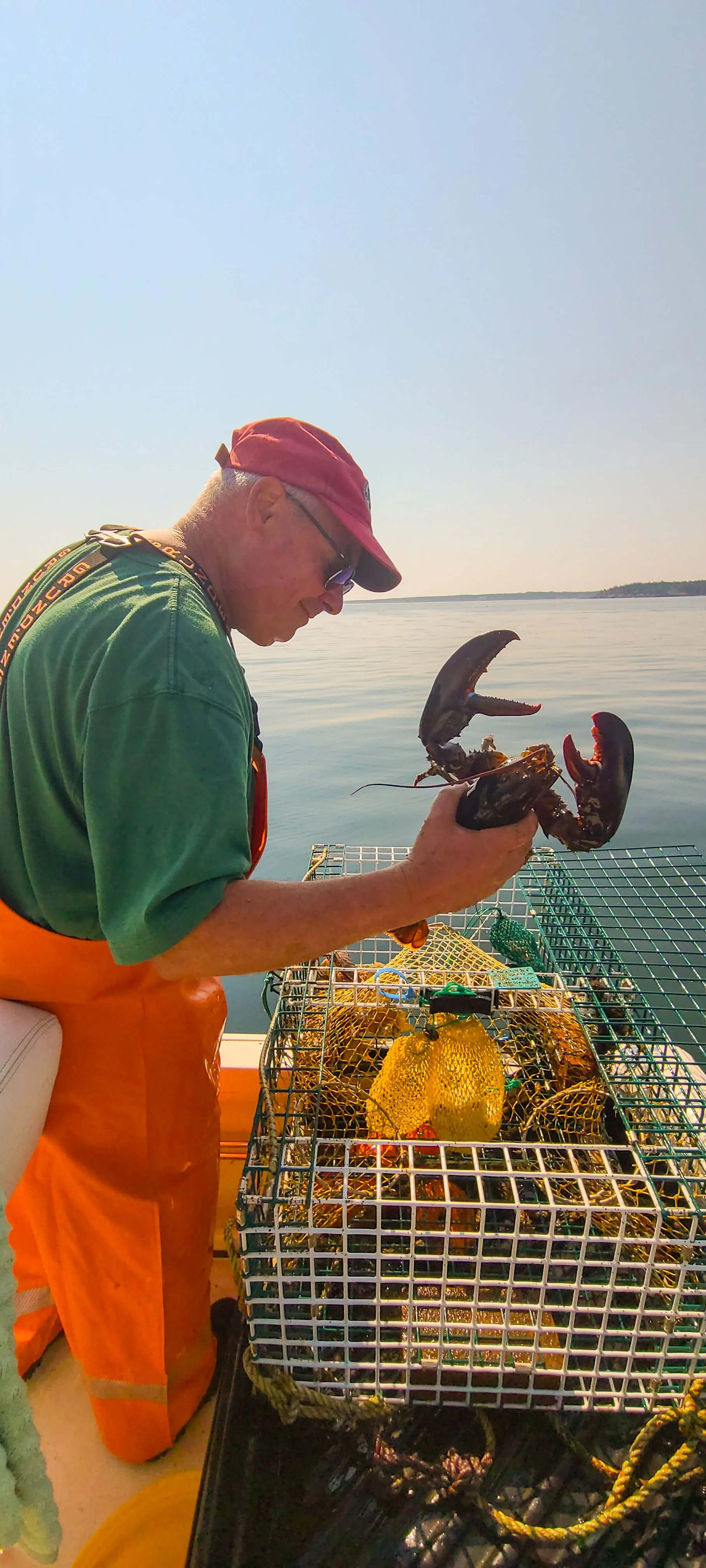
I set out to get a couple buckets of herring for lobster bait this weekend, so I called a place Downeast and asked if it was possible to get some. The fellow on the phone sounded like if you opened the dictionary to “Mainer,” his picture would be there. Thick Downeast accent, all the old Maine words, wicked dry, no extra syllables wasted. The kind of guy Melissa could hear through the phone and say, “Wow, that guy’s a Mainer.”
He told me to head down to the wharf and someone would be there. So we drove down. No one was there.
But a couple of other fishermen pulled in around the same time, and they knew the after-hours setup. Open the bait shed, take what you need, write down your name and what you took. Honor system.
These people did not know me from a hole in the wall. I was just a guy from a few towns away, standing there needing bait. And yet the whole system was built on the assumption that I’d do the right thing.
So I took two buckets, wrote down my name and added my phone number, closed the shed door, and left.
I called the guy back to ask how to pay, and he said his crew was supposed to have been there, but not to worry about it — we could settle up next time I came by.
Next time I came by.
Again, he has no idea who I am. I could be back next week, next year, or maybe not for a good long while. But he just trusted me.
So I mailed a check and added extra for trusting me.
Because that’s how things work around here.
That’s the way I remember it was growing up, and that’s the Maine I love.